



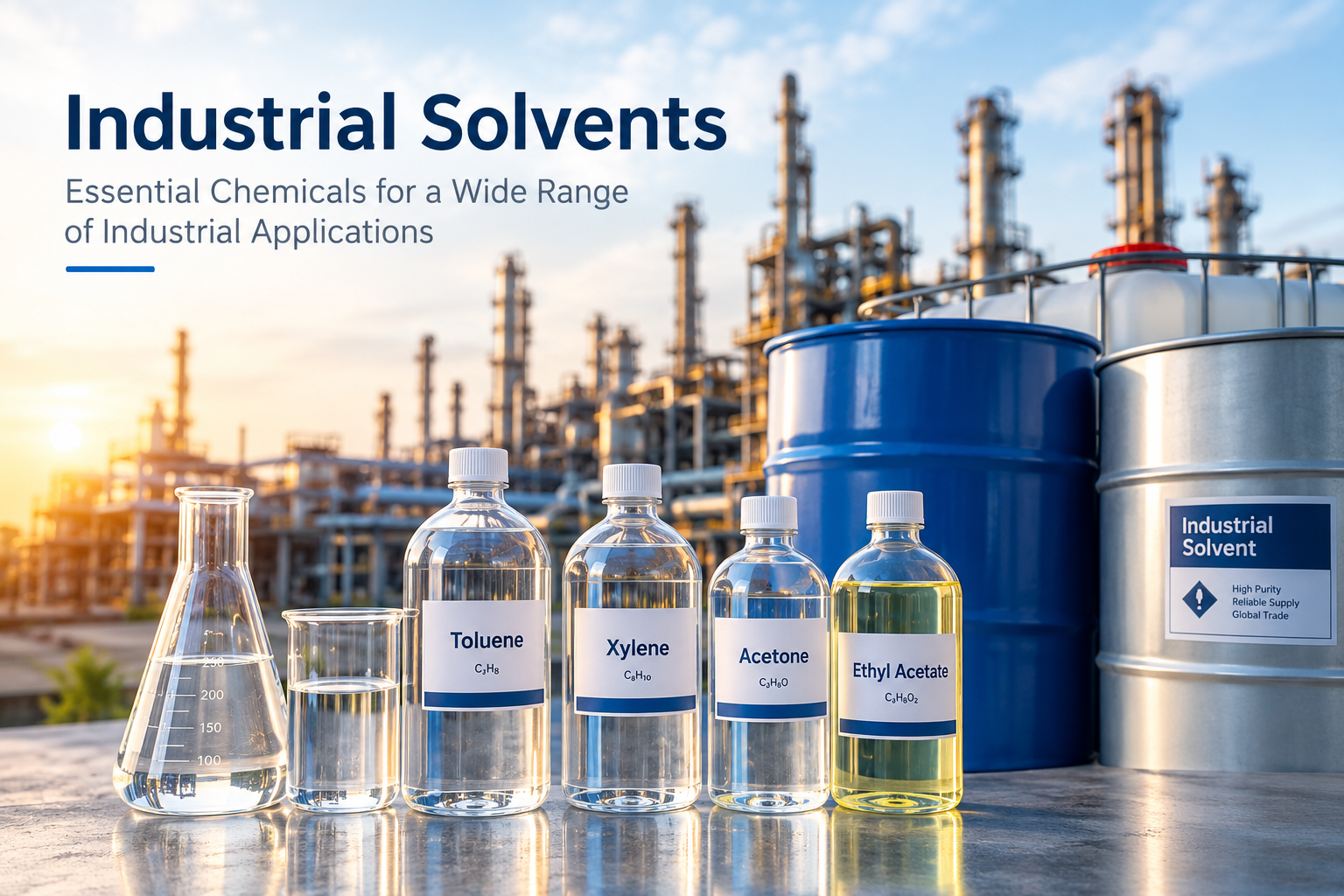
Industrial Solvents
Industrial solvents are essential chemicals used across manufacturing, processing, cleaning, and formulation industries. They help dissolve, dilute, extract, or remove different materials during industrial operations. As a result, solvents play an important role in product quality and production efficiency.
Different industries require solvents with specific chemical and physical properties. Therefore, choosing the right product requires careful attention to purity, performance, compatibility, and application requirements. In addition, reliable supply can significantly reduce production interruptions and purchasing risks.
Sipan Holding supplies industrial chemicals for businesses seeking dependable sourcing and international supply solutions. Its chemical supply capabilities can support different industrial requirements and purchasing volumes.
What Are Industrial Solvents?
Industrial solvents are chemical substances used to dissolve, disperse, extract, or remove other materials. They can be either organic or inorganic, depending on their chemical composition and industrial purpose.
Many industrial solvents are produced from petroleum-based raw materials or chemical processes. Their properties can vary significantly, which makes product selection particularly important.
Important solvent properties include evaporation rate, solvency power, purity, flash point, and chemical stability. These characteristics determine how effectively a solvent performs in a specific industrial application.
Furthermore, solvent selection can influence production speed, product consistency, and overall operating costs. For this reason, manufacturers should evaluate technical requirements before purchasing.
Common Types of Industrial Solvents
Industrial solvents include many different products with specific applications and performance characteristics. Some solvents are widely used across multiple industries because of their versatility.
White Spirit
White Spirit is a petroleum-based solvent commonly used in paints, coatings, adhesives, and industrial cleaning. Its solvent properties make it suitable for various formulation and maintenance applications.
Different grades can provide different performance characteristics depending on the manufacturing process. Therefore, buyers should review product specifications before selecting a specific grade.
Toluene
Toluene is an aromatic solvent known for its strong solvency and useful evaporation characteristics. It is widely used in paints, coatings, adhesives, and chemical manufacturing.
Additionally, Toluene can serve as a raw material in several chemical processes. Its strong solvency makes it valuable for demanding industrial formulations.
Xylene
Xylene is another important aromatic solvent used in numerous industrial applications. It is commonly found in paints, coatings, printing products, and chemical formulations.
Xylene can provide strong solvency while maintaining useful evaporation characteristics. However, different grades and mixtures may offer different performance levels.
Acetone
Acetone is a fast-evaporating solvent with excellent dissolving capabilities. It is commonly used for cleaning, degreasing, manufacturing, and surface preparation.
Its rapid evaporation can be beneficial when production processes require quick drying. Nevertheless, appropriate storage and handling procedures remain essential.
Ethyl Acetate
Ethyl Acetate is a versatile solvent used in coatings, adhesives, inks, and other industrial formulations. It offers useful solvency combined with relatively fast evaporation.
Manufacturers often select Ethyl Acetate according to formulation requirements and desired drying characteristics. Product purity can also influence performance in sensitive applications.
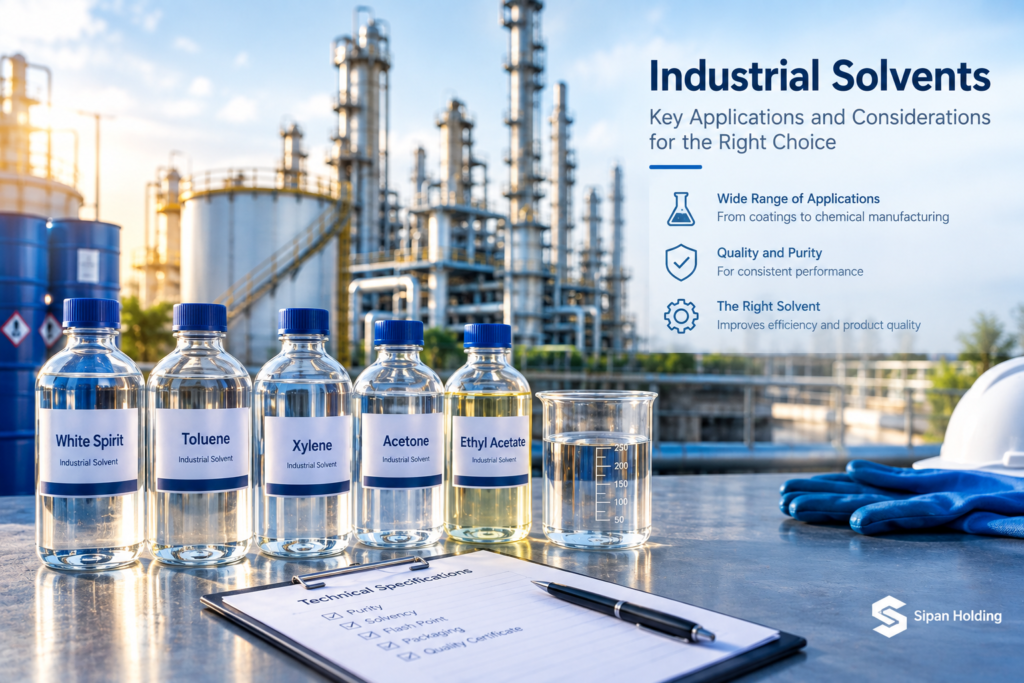
Industrial Applications of Solvents
Industrial solvents support a wide range of manufacturing and processing activities. Their specific applications depend on chemical properties, production conditions, and final product requirements.
Paints and Coatings
Solvents are important components in many paint and coating formulations. They help dissolve resins and control viscosity during manufacturing and application.
The selected solvent can also influence drying time, application behavior, and coating performance. Therefore, manufacturers should match solvent characteristics with formulation requirements.
Adhesive Manufacturing
Many adhesive formulations use solvents to dissolve and distribute their different components. Solvents can help achieve the required viscosity and improve application characteristics.
Moreover, the correct solvent can contribute to consistent formulation performance. Compatibility should therefore be evaluated before large-scale production.
Industrial Cleaning
Industrial solvents are widely used for removing grease, oil, residues, and other contaminants. They can support cleaning operations involving machinery, equipment, and industrial components.
However, solvent compatibility is important when cleaning sensitive materials. Selecting an unsuitable product may damage surfaces or affect equipment performance.
Chemical Manufacturing
Solvents are essential in many chemical manufacturing processes. They can function as reaction media, extraction agents, processing aids, or formulation components.
Their chemical stability can affect process efficiency and final product quality. Consequently, manufacturers should carefully review technical specifications before purchasing.
Printing and Packaging
The printing industry uses various solvents in inks, coatings, and related formulations. Solvent selection can influence drying speed, adhesion, and print quality.
For this reason, manufacturers should consider both formulation requirements and production conditions when selecting solvents.
Key Factors When Choosing Industrial Solvents
Choosing an industrial solvent requires more than comparing product prices. Several technical and commercial factors can affect the suitability of a product.
Product Purity
Purity is one of the most important considerations when purchasing industrial solvents. Impurities can influence product performance and create problems during manufacturing.
Buyers should therefore review technical specifications and available quality documentation. A consistent product specification can support stable production results.
Solvency and Performance
Every industrial application requires specific solvent characteristics. These characteristics may include solvency strength, evaporation rate, viscosity, and chemical compatibility.
A suitable solvent should meet the requirements of the intended formulation or process. Consequently, technical suitability should be evaluated before price comparisons.
Packaging Requirements
Packaging can influence product protection during storage and transportation. Suitable containers can help reduce contamination, leakage, and exposure to unsuitable environmental conditions.
Buyers should select packaging according to product characteristics and shipment requirements. Bulk purchasing may also require specialized transportation and storage arrangements.
Supply Reliability
Reliable supply is essential for manufacturers with continuous production schedules. Unexpected shortages can delay production and increase operational expenses.
Therefore, buyers should evaluate supplier capacity, delivery consistency, export experience, and available stock. Long-term supply relationships can also simplify future procurement.
Safe Handling and Storage
Many industrial solvents are flammable or require controlled handling conditions. Therefore, storage and handling procedures should follow applicable safety requirements.
Adequate ventilation can help control the accumulation of solvent vapors. Appropriate protective equipment should also be used during handling and transfer operations.
Containers should remain properly closed when products are not in use. Furthermore, solvents should be stored according to their specific safety and compatibility requirements.
How to Choose a Reliable Industrial Solvent Supplier
Supplier selection can have a direct impact on product quality and supply continuity. A reliable supplier should understand technical requirements and provide consistent product specifications.
Buyers should also evaluate the supplier’s experience with industrial chemical distribution. Export capabilities can be particularly important for international customers.
In addition, clear communication can simplify product selection and order management. Technical support can help buyers identify suitable products for specific applications.
Sipan Holding provides industrial chemical supply solutions for customers with different sourcing requirements. Its activities include supporting industrial buyers with chemical products and international supply needs.
Conclusion
Industrial solvents are essential for numerous manufacturing, processing, cleaning, and formulation applications. Products such as White Spirit, Toluene, Xylene, Acetone, and Ethyl Acetate serve different industrial purposes.
Each solvent offers specific properties that determine its suitability for particular applications. Therefore, buyers should evaluate purity, performance, compatibility, packaging, documentation, and supply reliability.
Furthermore, selecting a dependable supplier can help reduce procurement risks and support consistent production. A complete evaluation should consider both technical requirements and total purchasing costs.
Sipan Holding can support businesses seeking reliable industrial chemical sourcing and international supply solutions. Careful solvent selection can ultimately contribute to efficient operations and consistent product quality.

