



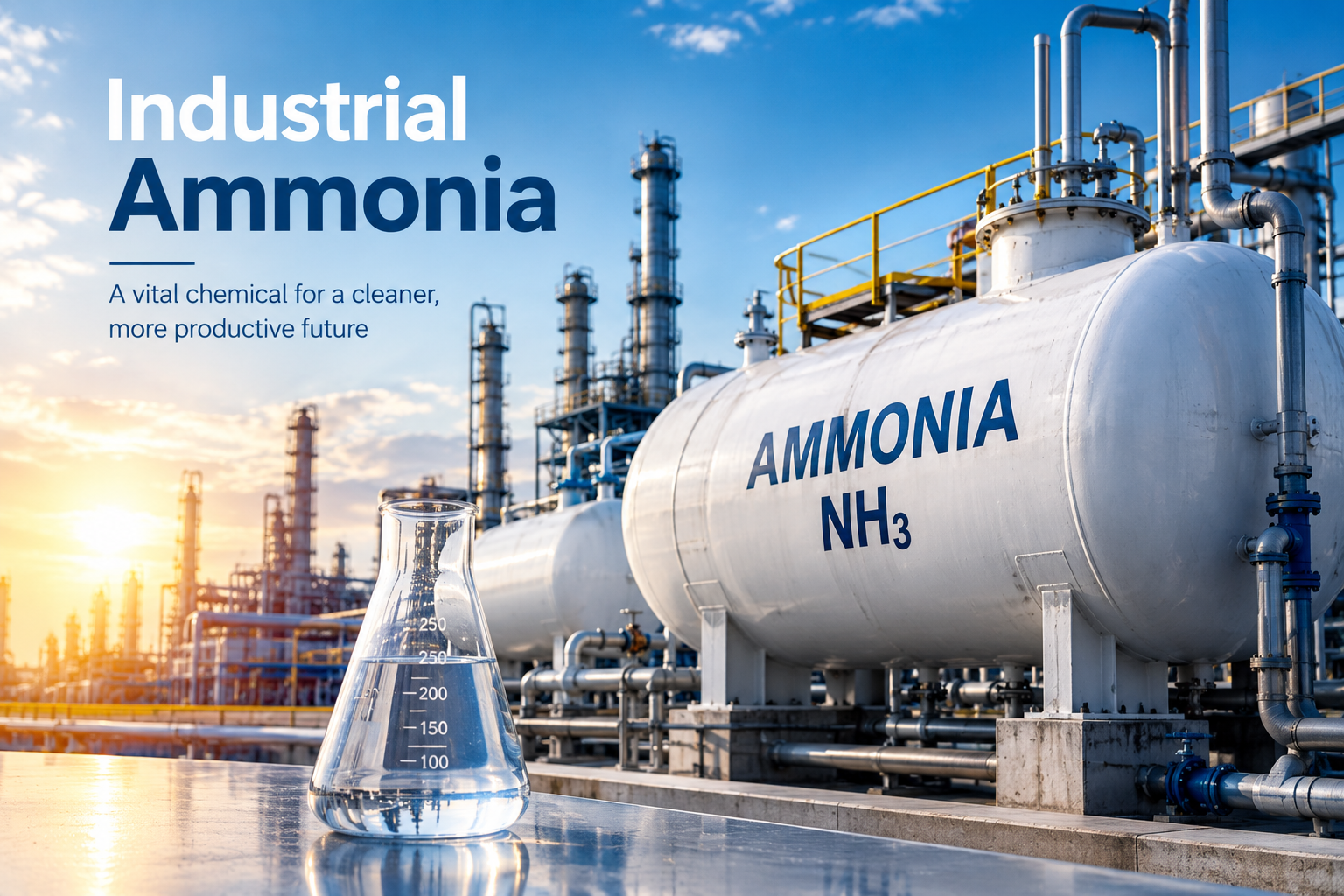
Industrial Ammonia
Ammonia is one of the most important chemicals used across modern industries. Its unique properties make it valuable in agriculture, chemicals, refrigeration, and manufacturing.
Industrial ammonia is available in different grades and concentrations. Therefore, choosing the right product requires attention to purity, storage, transportation, and application requirements.
For industrial buyers, understanding ammonia properties is essential. Proper selection can improve process efficiency while reducing operational and safety risks.
What Is Industrial Ammonia?
Ammonia is an inorganic chemical compound with the formula NH₃. It consists of nitrogen and hydrogen and has a strong, distinctive odor.
At standard conditions, ammonia is a colorless gas. It can also be stored and transported as a liquefied gas under pressure or at low temperatures.
Industrial ammonia is widely used because of its chemical reactivity. It also has excellent solubility in water and several important industrial properties.
The required grade depends on the intended application. Therefore, buyers should always check technical specifications before purchasing.
Key Properties of Ammonia
Ammonia has several properties that make it suitable for industrial applications. Its high nitrogen content is especially important for fertilizer production.
It is highly soluble in water and can form ammonium hydroxide solutions. Ammonia also reacts with acids to produce various ammonium salts.
The chemical has a relatively low boiling point. Consequently, industrial ammonia requires suitable pressure vessels or controlled storage systems.
Its strong odor can help identify leaks. However, odor detection should never replace professional monitoring and safety equipment.
Industrial Applications of Ammonia
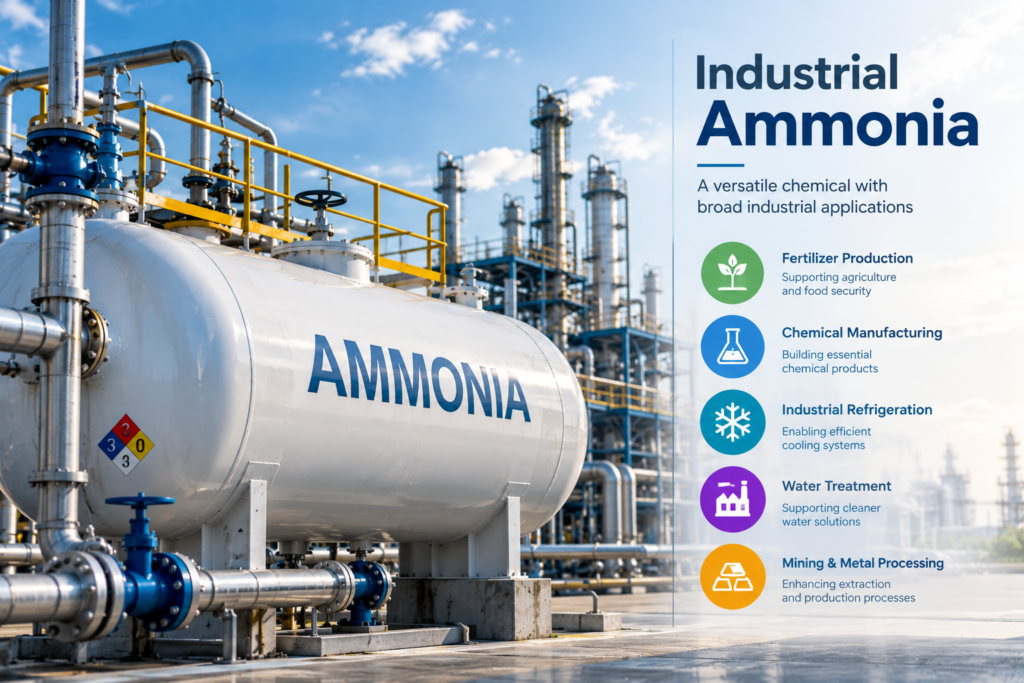
Ammonia is used in numerous industrial processes. Its applications range from fertilizer manufacturing to refrigeration systems.
Fertilizer Production
Fertilizer manufacturing is one of the largest applications of industrial ammonia. Ammonia provides an essential nitrogen source for agricultural products.
It is used to produce fertilizers such as urea and ammonium nitrate. These products support plant growth and agricultural productivity.
Because fertilizer production requires large quantities, reliable ammonia supply is essential. Consistent quality can also support stable manufacturing processes.
Chemical Manufacturing
Ammonia is an important raw material for many chemical products. It participates in reactions that produce various nitrogen-based compounds.
Manufacturers use ammonia to produce ammonium salts, nitric acid, and other chemical intermediates.
Therefore, industrial ammonia plays an important role throughout the chemical manufacturing sector.
Industrial Refrigeration
Ammonia is widely used as a refrigerant in large industrial refrigeration systems. Its thermodynamic properties make it suitable for high-capacity cooling applications.
Food processing facilities often use ammonia refrigeration systems. Cold storage warehouses and other industrial facilities can also rely on this refrigerant.
Proper system design and professional maintenance are essential when working with ammonia refrigeration equipment.
Water and Wastewater Treatment
Ammonia can be used in certain water treatment processes. It also serves as a chemical component in some treatment systems.
In combination with chlorine, ammonia can contribute to chloramine formation. These compounds are used in specific water disinfection applications.
The exact treatment process depends on water quality and regulatory requirements.
Mining and Metal Processing
Ammonia is also used in selected mining and metal-processing operations. Its chemical properties support different extraction and processing methods.
Some processes use ammonia-based solutions to separate or recover specific metals.
The required concentration and purity depend on the particular industrial process.
Benefits of Industrial Ammonia
Industrial ammonia offers several advantages for manufacturers and processing facilities.
First, it is an efficient source of nitrogen for chemical production. This makes it particularly important for fertilizer manufacturing.
Second, ammonia has strong chemical reactivity. This property allows manufacturers to produce a wide range of downstream chemicals.
Furthermore, ammonia is an effective refrigerant for many large-scale systems. Its performance can make it suitable for demanding industrial cooling applications.
However, these benefits depend on correct handling and appropriate system design.
Ammonia Storage Requirements
Proper storage is essential when handling industrial ammonia. Storage conditions depend on the physical form, quantity, and application.
Liquefied ammonia is commonly stored in specially designed pressure vessels. These systems must meet applicable engineering and safety requirements.
Storage areas should have adequate ventilation and suitable safety equipment. They should also be protected from excessive heat and unauthorized access.
Regular inspection can help identify leaks, corrosion, or equipment problems. Emergency procedures should also be established before ammonia is stored.
Safe Handling of Industrial Ammonia
Ammonia requires careful handling because exposure to high concentrations can be hazardous. Workers should receive appropriate training before handling the chemical.
Suitable personal protective equipment should be used according to the specific operation. Appropriate respiratory protection may also be necessary in certain conditions.
Facilities should maintain emergency response procedures for potential releases. Leak detection and ventilation systems can provide additional protection.
Ammonia should always be handled according to its Safety Data Sheet and applicable regulations.
How to Choose Industrial Ammonia
Selecting the right ammonia product requires more than comparing prices. Buyers should evaluate several technical and commercial factors.
Purity and Quality
Check the ammonia specification before placing an order. Purity requirements may vary depending on the intended application.
Packaging and Delivery
Consider the required packaging, transportation method, and delivery schedule. The supplier should have suitable logistics capabilities for ammonia.
Technical Documentation
Reliable suppliers should provide relevant technical documentation. Safety Data Sheets and product specifications are particularly important.
Supplier Reliability
Consistent supply is important for continuous industrial operations. Buyers should evaluate the supplier’s experience, quality control, and logistics capabilities.
Industrial Ammonia Supply
A dependable supply chain can reduce interruptions in industrial production. Therefore, buyers should consider both product quality and supplier performance.
Sipan Holding can support industrial buyers looking for reliable ammonia supply and chemical sourcing solutions. The company can assist customers with supply requirements based on their application and purchasing needs.
Before ordering, buyers should confirm product specifications, required quantity, delivery conditions, and applicable safety requirements.
Conclusion
Industrial ammonia is a versatile chemical with applications across several major industries. Its role in fertilizers, chemicals, refrigeration, and other processes makes it highly important.
However, safe storage, transportation, and handling require appropriate procedures and equipment. Product quality is equally important for achieving consistent industrial performance.
Therefore, buyers should evaluate purity, documentation, packaging, logistics, and supplier reliability before purchasing.
For industrial ammonia sourcing and supply requirements, Sipan Holding can provide professional support and help buyers identify suitable supply solutions.

