



Buying Nitric Acid
Nitric acid is a strong industrial chemical used across many manufacturing sectors. Its quality can directly affect production results, process stability, and product consistency. Therefore, buying nitric acid requires more than comparing prices between suppliers. Industrial buyers should review concentration, purity, packaging, documentation, and delivery conditions.
For companies sourcing chemicals in bulk, supplier reliability is equally important. A consistent supply can reduce production delays and support long-term procurement planning. In this guide, we explain the main factors to consider before ordering nitric acid.
What Is Nitric Acid?
Nitric acid, commonly known as HNO₃, is a highly reactive inorganic acid. It is widely used in fertilizers, metal processing, chemical manufacturing, and laboratory applications. The required specification depends on the intended process and operating conditions. For this reason, buyers should define technical requirements before contacting suppliers.
Nitric acid is available in different commercial concentrations and purity levels. Industrial products may differ from laboratory or high-purity grades. Choosing the correct grade helps prevent unnecessary costs and quality problems.
Define the Required Nitric Acid Grade
The first step is identifying the required concentration. Different industrial processes may require different commercial concentrations. The most common grades are selected according to process requirements and supplier specifications.
Purity is another important consideration. Some applications require controlled levels of metals, chlorides, sulfates, or other impurities. In contrast, standard industrial applications may allow broader impurity limits.
Buyers should therefore request a complete technical specification. This document should clearly state concentration, appearance, purity, and impurity limits. A precise specification reduces misunderstandings between buyers and suppliers.
Check the Certificate of Analysis
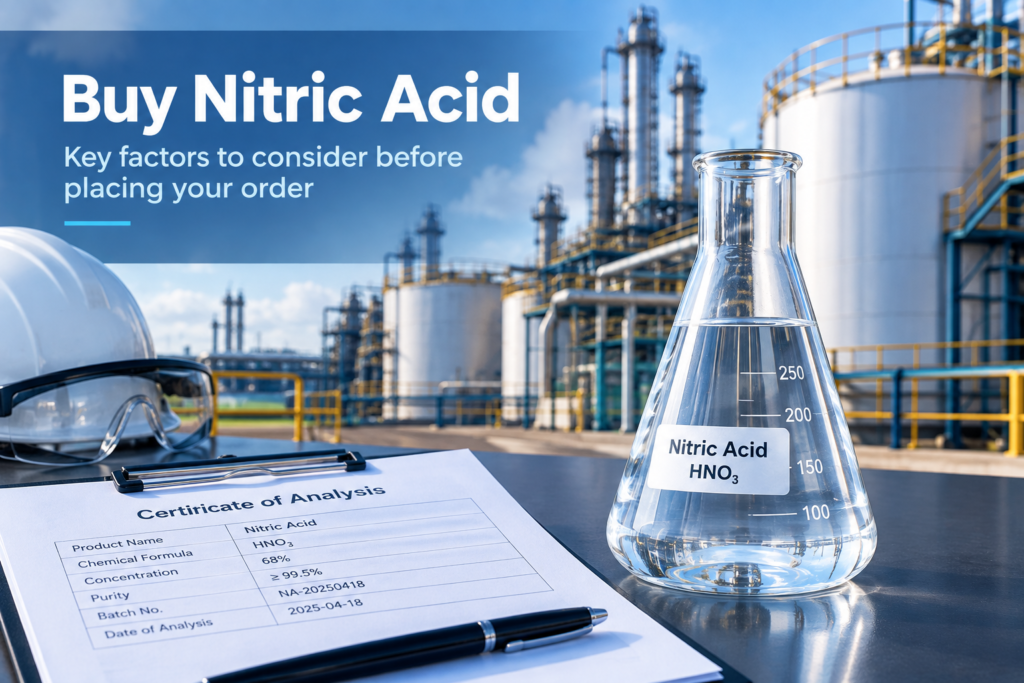
A Certificate of Analysis, or CoA, provides important quality information. It usually confirms tested parameters for a specific production batch. Buyers should review the CoA before approving a large nitric acid shipment.
The document should match the agreed product specification. It should also identify the batch or lot number. In addition, test results should be clear and traceable.
For recurring purchases, keeping previous CoAs can support quality comparisons. This practice helps procurement teams identify unexpected changes between shipments.
Evaluate Nitric Acid Packaging
Packaging is a critical part of industrial chemical purchasing. Nitric acid requires compatible containers designed for the product and transport conditions. The correct packaging can reduce leakage, contamination, and handling risks.
Bulk buyers may receive nitric acid in approved drums, intermediate containers, or dedicated transport systems. The suitable option depends on order volume and logistics requirements. Packaging should also meet applicable transportation and safety requirements.
Before placing an order, confirm container material and capacity. Also verify labeling, sealing, and palletization details. These points can affect both safety and delivery efficiency.
Choose a Reliable Nitric Acid Supplier
Supplier selection should consider technical capability, consistency, and communication. A low price alone does not guarantee a successful chemical purchase. Reliable suppliers should provide clear specifications and supporting documentation.
Experience with industrial customers can also be valuable. Established suppliers usually understand documentation, logistics, and recurring supply requirements. Furthermore, responsive communication can simplify urgent procurement issues.
Buyers should review the supplier’s product information before committing to a large order. They should also confirm available quantities and expected lead times. Clear commercial terms can prevent avoidable disputes after purchase.
Compare Price and Total Purchasing Cost
The quoted price is important, but it should not be the only factor. The total purchasing cost can include packaging, transport, insurance, and handling. Import duties or local charges may also affect the final cost.
Therefore, buyers should compare complete offers rather than unit prices alone. A slightly higher product price may still produce a lower total cost. This can happen when the supplier offers better packaging or more efficient logistics.
Volume can also influence commercial pricing. Large orders may receive different terms than smaller shipments. However, buyers should balance lower prices against storage capacity and consumption rates.
Review Storage and Delivery Requirements
Nitric acid is classified as a hazardous chemical and requires controlled handling. Buyers should confirm that their facility can receive and store the product appropriately. Relevant safety procedures should be established before delivery.
Transport arrangements should match the product’s classification and packaging. Suppliers should provide the required shipping documentation. Delivery planning should also consider unloading procedures and site requirements.
Good coordination can reduce delays at the receiving location. It can also prevent problems caused by unsuitable vehicles or incomplete documents.
Request Complete Documentation
Documentation is a major part of professional chemical sourcing. Depending on the market, buyers may need an SDS, CoA, invoice, packing list, and transport documents. Regulatory documents may also be required for imports or specific industrial uses.
The SDS explains key hazards, handling measures, storage guidance, and emergency information. Buyers should review the document before receiving the shipment. They should also ensure that documentation matches the supplied product.
Accurate paperwork supports traceability and smoother customs procedures. It can also simplify internal audits and quality checks.
When to Buy Nitric Acid in Bulk
Bulk purchasing can make sense for facilities with steady consumption. Higher order volumes may improve commercial terms and reduce repeated freight costs. However, storage capacity remains an important limitation.
Before ordering in bulk, estimate average monthly consumption. Then compare that figure with available storage and delivery frequency. A balanced purchasing plan can reduce both shortages and excess inventory.
Long-term supply agreements may also improve procurement stability. Such agreements can help companies plan future production and purchasing budgets.
Why Supplier Transparency Matters
Transparency is especially important when buying industrial nitric acid. A trustworthy supplier should communicate product specifications clearly. They should also explain packaging, availability, and delivery conditions before confirmation.
Clear communication creates a stronger basis for long-term cooperation. It also helps buyers identify unexpected costs before placing an order. For industrial procurement teams, this transparency can be as valuable as price.
Final Checklist Before Ordering Nitric Acid
Before confirming an order, review the complete product specification. Verify concentration, purity, packaging, quantity, and required documentation. Then confirm delivery terms, lead time, and total purchasing cost.
Also make sure your facility is prepared for safe receipt and storage. Finally, keep all commercial and technical documents for future reference. A structured purchasing process can reduce risk and improve supply reliability.
For industrial buyers, choosing the right nitric acid is a technical procurement decision. Quality, documentation, logistics, and supplier consistency should all be considered together. With careful planning, companies can build a more reliable and efficient sourcing process.
For reliable nitric acid supply and professional purchasing support, contact Sipan Holding.

