



Nitric Acid Grades: How to Choose the Right Grade for Industrial Use
Choosing the right nitric acid grade is important for industrial performance, safety, and product quality. Different industries require different concentrations, purity levels, and specifications for their processes. Therefore, buyers should understand nitric acid grades before placing a commercial order.
What Is Nitric Acid?
Nitric acid is a strong mineral acid with the chemical formula HNO₃. It is usually supplied as a clear to slightly yellow liquid. Its concentration and purity can vary depending on the intended industrial application. Because of its strong oxidizing properties, nitric acid requires careful handling and proper storage.
Industrial nitric acid is widely used in chemical manufacturing, metal processing, fertilizer production, and several other industries. The required grade depends mainly on the process, concentration, impurities, and application requirements.
Main Nitric Acid Grades
Nitric acid is available in different grades for industrial and specialized applications. Understanding these grades helps buyers select suitable material while avoiding unnecessary costs.
Dilute Nitric Acid
Dilute nitric acid contains a lower concentration of HNO₃ than concentrated grades. It is commonly used when highly concentrated acid is unnecessary for the process. Industrial users may prefer dilute nitric acid for certain chemical reactions and processing operations. The required concentration should always match the specific process requirements.
Concentrated Nitric Acid
Concentrated nitric acid contains a significantly higher percentage of HNO₃. It is used in applications that require stronger chemical activity or higher acid concentration. Concentration requirements can vary between industrial processes. Therefore, buyers should confirm the required percentage before purchasing concentrated nitric acid.
High-Purity Nitric Acid
High-purity nitric acid contains very low levels of unwanted impurities. This grade is important for applications where contamination can affect the final product. Specialized chemical and technical processes may require tighter purity specifications. Buyers should review the certificate of analysis before selecting a high-purity grade.
Technical-Grade Nitric Acid
Technical-grade nitric acid is commonly supplied for general industrial applications. Its specifications depend on the manufacturer, production process, and intended application. This grade can be suitable for processes where extremely low impurity levels are unnecessary. However, buyers should still verify concentration, purity, and relevant specifications before ordering.
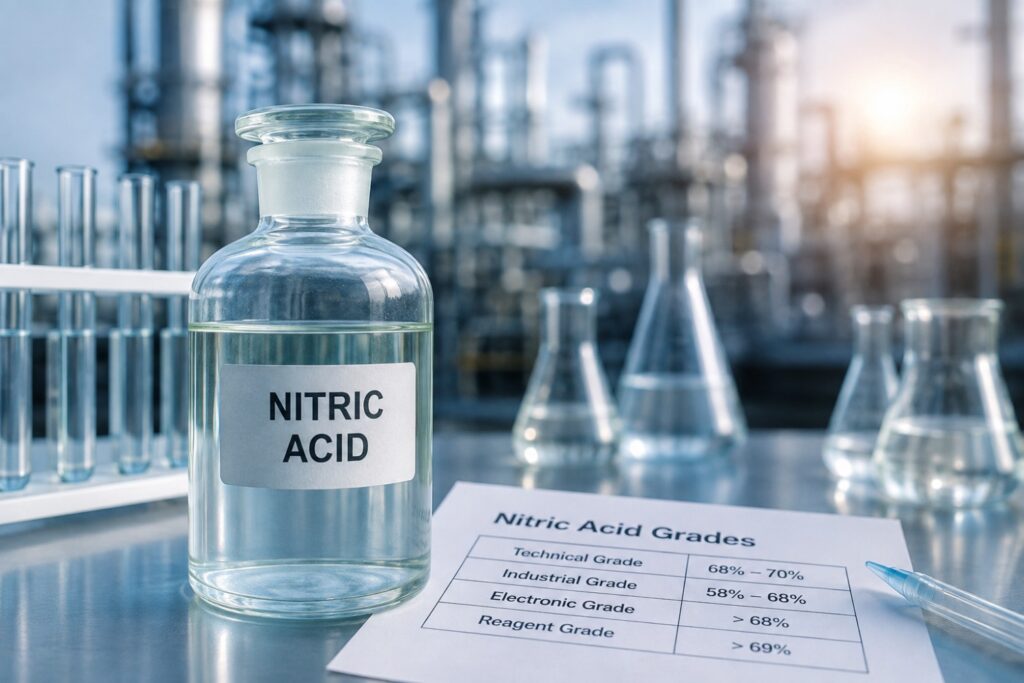
How to Choose the Right Nitric Acid Grade
Selecting the correct grade starts with understanding the exact industrial application. The same acid concentration may not be suitable for every manufacturing process.
Check the Required Concentration
Concentration is one of the most important purchasing specifications for nitric acid. Always compare the supplier’s stated concentration with your process requirements. A difference in concentration can affect reaction conditions and process efficiency. For this reason, buyers should avoid choosing a grade based only on price.
Review Purity Requirements
Purity becomes especially important when impurities can affect production or final product quality. Ask the supplier for detailed specifications and a current certificate of analysis. The certificate can provide information about concentration and relevant impurities. This documentation also helps buyers compare products from different suppliers.
Consider the Industrial Application
The intended application should determine the appropriate nitric acid grade. Chemical manufacturing may require specifications different from those used in metal processing. Similarly, fertilizer-related applications can have different concentration and quality requirements. Defining the application before purchasing makes supplier communication much easier.
Evaluate Packaging and Transportation
Nitric acid requires compatible packaging and appropriate transportation conditions. The packaging should be suitable for corrosive and oxidizing chemical materials. Bulk deliveries may require specialized containers and transportation arrangements. Therefore, packaging should be considered alongside concentration, quality, and price.
Why Supplier Selection Matters
Choosing a reliable supplier is essential when purchasing industrial nitric acid. A consistent supplier can provide stable specifications across different orders. Buyers should evaluate product documentation, packaging standards, delivery capability, and technical support.
Clear communication can also reduce misunderstandings about concentration and quality requirements. Price is important, but it should not be the only purchasing criterion. A lower price may not provide the specifications required for your production process.
Nitric Acid Storage and Handling
Nitric acid should be stored in suitable facilities with appropriate safety controls. Storage areas should be designed according to applicable chemical safety requirements. Workers should use suitable personal protective equipment when handling nitric acid. They should also follow the supplier’s safety documentation and site-specific procedures.
Because nitric acid is corrosive and strongly oxidizing, incompatible materials should be kept away. Proper ventilation and emergency procedures are also important for industrial facilities.
Final Checklist Before Buying Nitric Acid
Before placing an order, industrial buyers should confirm several important specifications. These include concentration, purity, grade, packaging, quantity, and delivery requirements. The supplier should provide clear technical documentation for the supplied material.
Buyers should also verify whether the product meets their internal quality specifications. Comparing suppliers based on complete technical information can support better purchasing decisions. This approach can also reduce quality problems and unexpected production costs.
Conclusion
Choosing the right nitric acid grade requires more than comparing prices between suppliers. Concentration, purity, application, packaging, documentation, and delivery all deserve careful consideration.
A suitable grade can support consistent production and reduce unnecessary purchasing risks. Therefore, industrial buyers should define their requirements before selecting a nitric acid supplier.
Sipan Holding can support industrial buyers with nitric acid sourcing and supply requirements. For technical consultation and nitric acid purchasing, contact Sipan Holding.

