



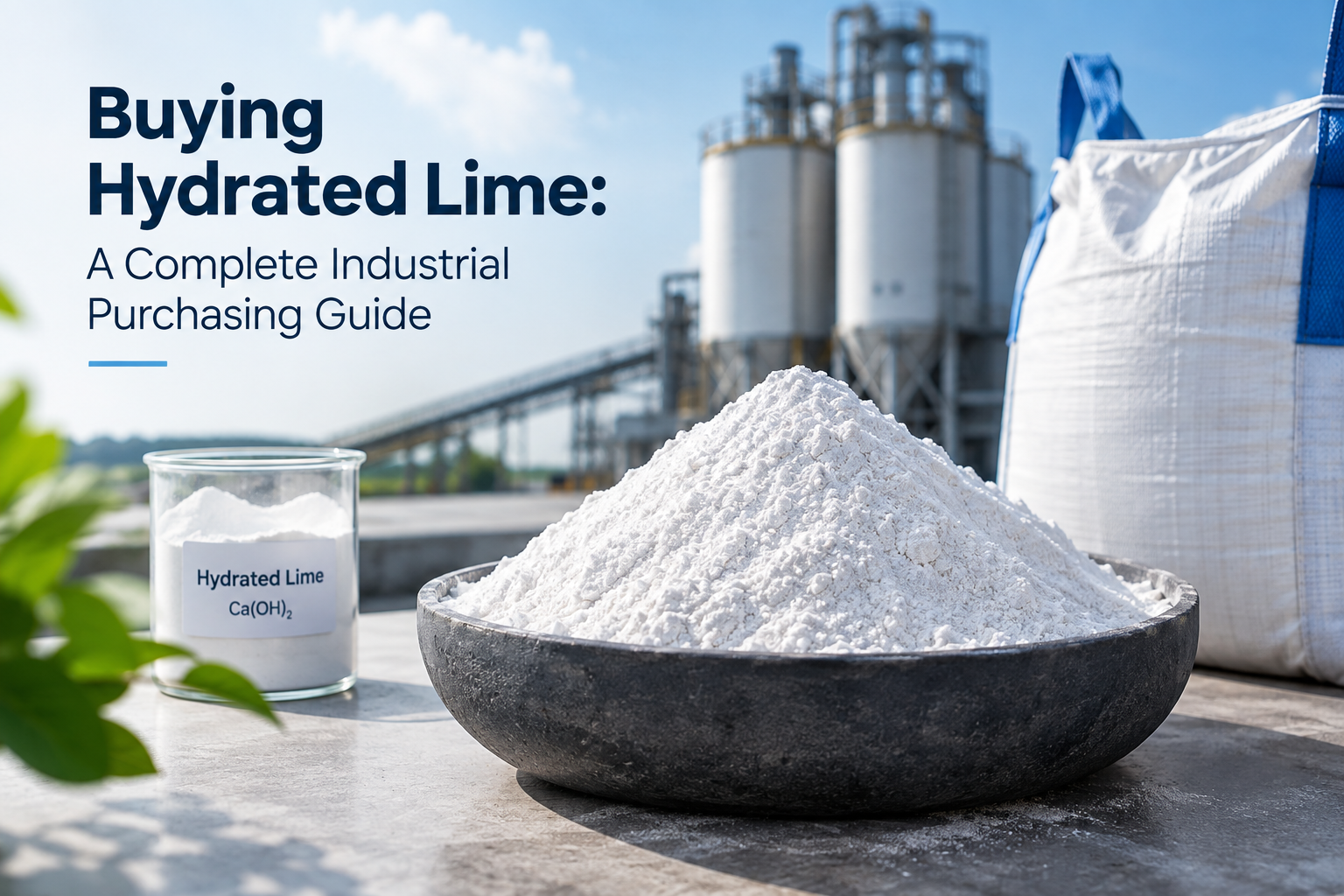
Buying Hydrated Lime: A Complete Industrial Purchasing Guide
Hydrated lime is an essential industrial material used in water treatment, construction, chemical processing, and environmental applications. Its chemical properties make it valuable for controlling pH, neutralizing acidic substances, and improving process efficiency. However, selecting the right product requires more than comparing prices.
When buying hydrated lime in bulk, industrial buyers should consider purity, chemical composition, particle size, packaging, storage conditions, and supplier reliability. These factors directly affect product performance and purchasing costs. Sipan Holding provides industrial chemical sourcing solutions for businesses seeking dependable hydrated lime supplies.
This guide explains the main factors to consider before placing an industrial hydrated lime order.
What Is Hydrated Lime?
Hydrated lime, also known as calcium hydroxide, is an inorganic chemical compound with the formula Ca(OH)₂. It is generally produced by reacting quicklime with water through a controlled hydration process.
The resulting material is commonly available as a fine white powder. Due to its alkaline nature, hydrated lime is widely used in industrial processes that require pH adjustment, neutralization, or chemical treatment.
Its performance depends on several properties, including calcium hydroxide content, moisture level, particle size, and impurities. Therefore, understanding these characteristics is important before purchasing the material.
Why Is Hydrated Lime Important for Industrial Buyers?
Hydrated lime serves different purposes across multiple industries. Consequently, purchasing requirements can vary significantly depending on the intended application.
In water treatment, it helps adjust pH and supports certain purification processes. Meanwhile, construction companies use it in mortar, plaster, and other building materials. Additionally, chemical manufacturers rely on its alkaline properties for specific reactions and processing operations.
For this reason, buyers should identify their technical requirements before requesting a quotation. Selecting a suitable grade can improve operational consistency and reduce unnecessary material costs.
Key Factors to Consider When Buying Hydrated Lime
Check Calcium Hydroxide Purity
Purity is one of the most important specifications when purchasing hydrated lime. A higher calcium hydroxide content may be necessary for applications with strict chemical requirements.
However, the required purity depends on the industrial process. Buyers should review the product specification sheet and compare it with their operational standards.
Furthermore, checking impurity levels helps determine whether the material is suitable for the intended use.
Evaluate Particle Size and Fineness
Particle size affects how hydrated lime behaves during handling, mixing, and application. Fine powders can offer better dispersion in certain processes, while other applications may require specific particle-size distributions.
Therefore, buyers should confirm the fineness specifications before ordering. Consistent particle size also supports predictable performance during production.
Review Moisture Content
Excessive moisture can affect powder flowability, storage stability, and handling efficiency. In addition, unsuitable storage conditions may cause hydrated lime to absorb moisture from the surrounding environment.
Industrial buyers should check moisture specifications and ensure that the supplied product meets their requirements. Proper packaging also plays an important role in maintaining product quality.
Request a Technical Data Sheet
A technical data sheet provides essential information about the product’s chemical and physical properties. It may include purity, appearance, moisture content, particle size, and other relevant specifications.
Before confirming a bulk order, buyers should review this document carefully. Where necessary, they can also request a certificate of analysis for the supplied batch.
These documents help purchasing teams compare products using measurable criteria rather than relying only on supplier descriptions.
Compare Packaging Options
Hydrated lime is commonly supplied in industrial bags or bulk packaging, depending on order volume and transportation requirements.
Small industrial orders may be suitable for standard bags, while large-scale buyers may prefer jumbo bags or other bulk solutions. Nevertheless, packaging must protect the powder against moisture and contamination.
Choosing the right packaging format can also simplify unloading, storage, and internal transportation.
Consider Bulk Pricing and Total Purchasing Costs
Price is an important factor, especially for companies purchasing hydrated lime regularly. However, the lowest quoted price does not always represent the lowest overall cost.
Transportation, packaging, handling, product consistency, and delivery arrangements can influence the final purchasing expense. Therefore, buyers should evaluate the complete quotation rather than comparing the product price alone.
For large orders, requesting a detailed quotation can make purchasing decisions more transparent.
Verify Supplier Reliability
A reliable supplier should provide clear product specifications, consistent communication, and realistic delivery arrangements. These factors become particularly important when hydrated lime is required for continuous industrial operations.
Buyers should also review the supplier’s ability to support bulk orders and provide relevant technical documentation.
Working with an experienced industrial chemical supplier can help reduce procurement uncertainty and improve supply planning.
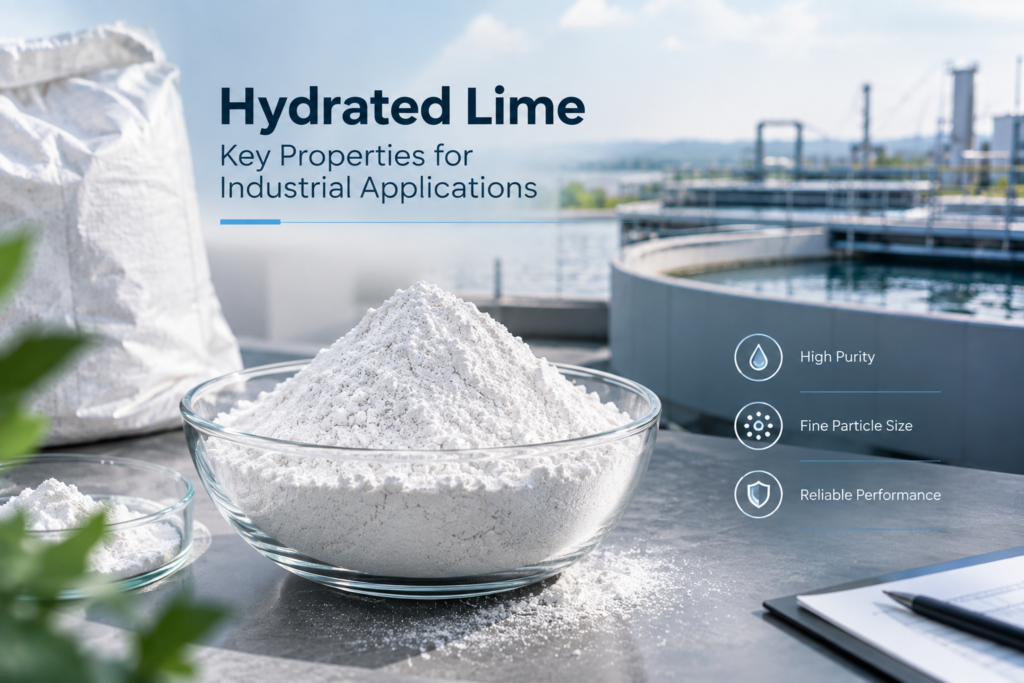
Applications That Influence Hydrated Lime Selection
The intended application determines which product specifications matter most.
Water and Wastewater Treatment
Hydrated lime is used for pH adjustment, neutralization, and certain water treatment processes. Buyers should consider chemical purity, reactivity, and consistency when selecting a suitable grade.
Construction and Building Materials
In construction, hydrated lime is used in mortar, plaster, and selected building formulations. Particle size, workability, and product consistency can influence its performance.
Chemical and Industrial Processing
Various industrial processes use hydrated lime as an alkaline material or chemical reagent. In these applications, buyers should pay close attention to purity and process-specific requirements.
Environmental Applications
Hydrated lime is also used in certain flue gas treatment and industrial waste management processes. The appropriate grade depends on the treatment system and its operating conditions.
Proper Storage and Handling After Purchase
Correct storage helps maintain hydrated lime quality after delivery. The material should be kept in a dry, well-ventilated area, away from moisture and incompatible substances.
Bags should remain properly sealed until use. Additionally, storage areas should be protected against water exposure and excessive humidity.
Because hydrated lime is alkaline, workers should follow the relevant safety data sheet and use suitable protective equipment. Eye protection, gloves, and appropriate respiratory protection may be required during handling.
Why Choose Sipan Holding for Hydrated Lime Supply?
Selecting an industrial chemical supplier involves evaluating product specifications, order requirements, packaging, and delivery coordination. Sipan Holding supports industrial buyers seeking hydrated lime and other chemical products for commercial and manufacturing applications.
By defining the required grade, quantity, and delivery conditions, buyers can receive more accurate purchasing information and plan their procurement more effectively.
For businesses purchasing hydrated lime in bulk, clear communication about technical requirements is an important step toward a successful order.
Conclusion
Buying hydrated lime requires careful attention to quality, purity, particle size, moisture content, packaging, and supplier reliability. Each factor can influence product performance, storage conditions, and total purchasing costs.
Therefore, industrial buyers should review technical documentation and confirm their application requirements before placing an order. A structured purchasing process can help businesses obtain suitable material while improving supply planning.
For hydrated lime inquiries, bulk orders, and purchasing arrangements, contact Sipan Holding.

