



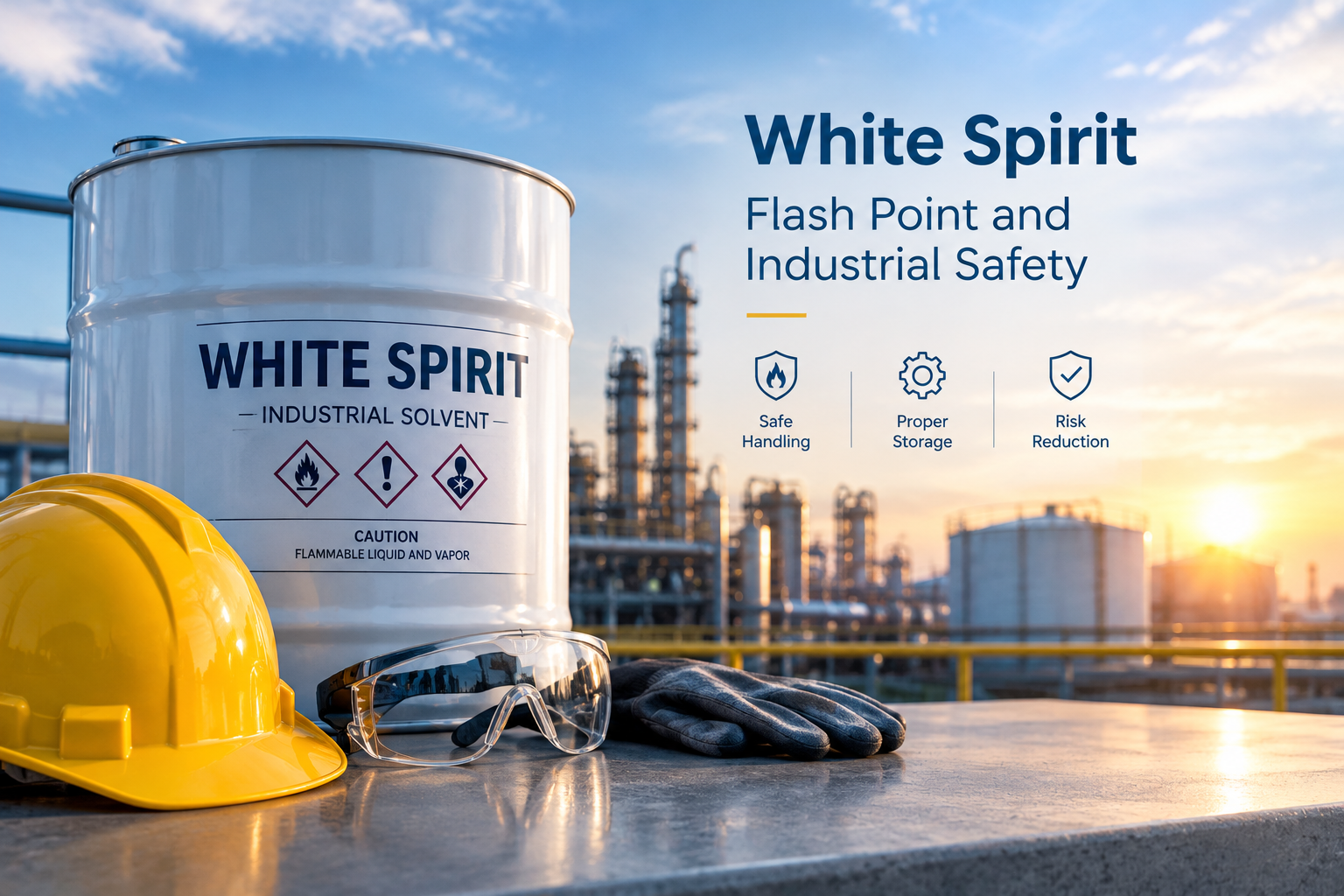
White Spirit Flash Point and Industrial Safety
White spirit is a widely used petroleum-based solvent in paints, coatings, varnishes, and industrial cleaning. Its performance depends on several physical properties, including volatility, evaporation rate, and flash point. Understanding these characteristics helps manufacturers select the right grade and manage workplace risks more effectively.
For industrial buyers, the flash point is particularly important because it influences how white spirit should be handled, stored, and transported. Sipan Holding understands the importance of reliable product specifications when sourcing industrial chemicals for different applications.
What Is the Flash Point of White Spirit?
The flash point is the lowest temperature at which a liquid produces enough vapor to ignite briefly when exposed to an ignition source under specified test conditions. It does not represent the temperature at which the liquid automatically catches fire.
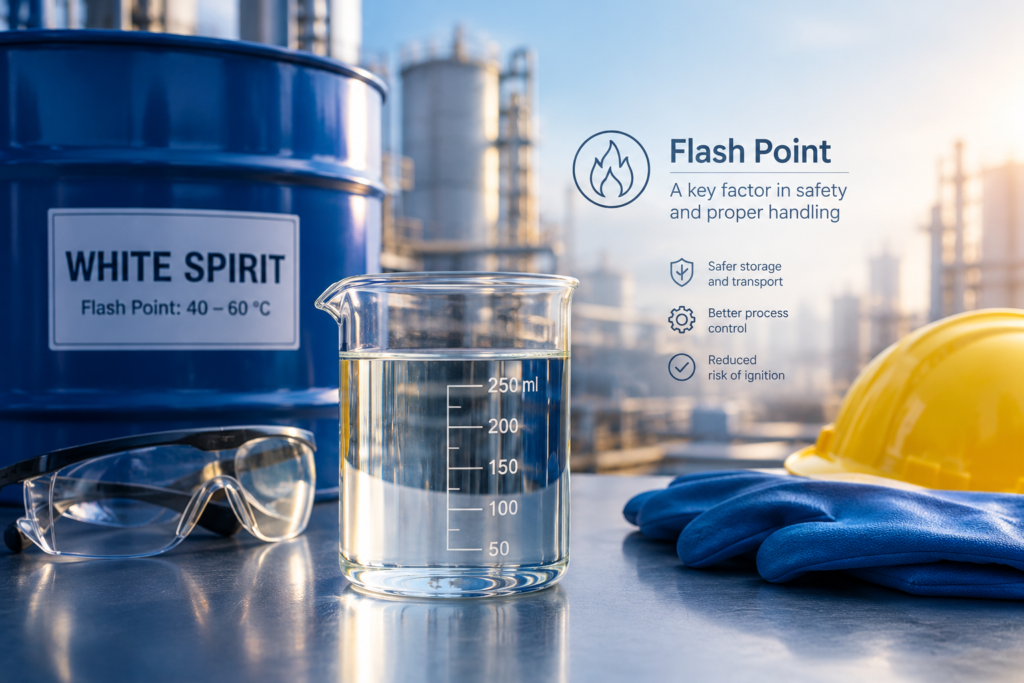
White spirit is available in different grades, and its flash point varies according to its composition and distillation range. Some grades have flash points below 30°C, while others have values above 55°C. These differences influence the precautions required during storage, transportation, and industrial use.
Therefore, buyers should never assume that every white spirit product has the same flash point. The product’s Safety Data Sheet (SDS) and Technical Data Sheet (TDS) should always be reviewed before purchase and use.
Why Does Flash Point Matter in Industrial Applications?
Flash point provides important information about the potential fire hazards associated with a solvent. However, it should be evaluated alongside other properties, including vapor pressure, ventilation requirements, and the presence of ignition sources.
Fire Prevention
White spirit vapors can ignite when they encounter a suitable ignition source and are present at an appropriate concentration in air. Consequently, open flames, hot surfaces, sparks, and unsuitable electrical equipment can create serious hazards.
Industrial facilities should establish appropriate fire prevention procedures based on the solvent grade, workplace conditions, and applicable regulations. Selecting a product with a suitable flash point can support these measures, but it does not eliminate the need for proper controls.
Safe Storage Conditions
Storage conditions influence the likelihood of vapor accumulation and accidental ignition. Containers should remain tightly closed when not in use and be kept in designated areas away from ignition sources and incompatible materials.
Storage facilities must also provide suitable ventilation and comply with applicable fire protection requirements. The necessary precautions depend on the product’s classification, packaging, storage quantity, and local regulations.
Workplace Handling
During industrial operations, white spirit may be transferred between containers, incorporated into formulations, or used for cleaning equipment. These activities can release vapors, particularly in poorly ventilated spaces.
Workers should follow established handling procedures, avoid unnecessary exposure, and use appropriate protective equipment. Safety measures should be determined using the product’s SDS and a workplace risk assessment.
What Factors Influence White Spirit Flash Point?
The flash point is closely related to the composition and volatility of the solvent. Understanding these factors helps industrial buyers evaluate different grades and select products that meet their requirements.
Hydrocarbon Composition
White spirit contains a mixture of petroleum-derived hydrocarbons rather than a single chemical compound. The proportions of lighter and heavier components influence its physical properties, including volatility and flash point.
Products containing more volatile components may produce ignitable vapors at lower temperatures. For this reason, composition and product specifications should be considered together when comparing suppliers.
Distillation Range
Distillation characteristics provide information about the temperatures at which the components of a solvent evaporate. In general, grades with higher boiling ranges tend to have higher flash points, although the exact relationship depends on their composition.
This relationship is useful when comparing different white spirit grades. However, distillation data alone should not replace a verified flash-point measurement.
Temperature and Vapor Formation
As temperature increases, white spirit generally evaporates more readily. This can increase vapor generation and influence the conditions under which an ignitable atmosphere develops.
A liquid’s flash point is measured under standardized conditions. It should not be interpreted as a universal safe operating temperature because actual workplace risks also depend on ventilation, vapor concentration, and ignition sources.
How to Store White Spirit Safely
Proper storage is essential for maintaining workplace safety and reducing the risk of fire or accidental exposure. Industrial facilities should develop procedures that reflect the specific grade and quantity being handled.
Use Suitable Containers
White spirit should be stored in compatible, properly labeled containers designed for the product. Containers must remain securely closed, and damaged packaging should be addressed according to established safety procedures.
Control Ignition Sources
Smoking, open flames, sparks, and other ignition sources should be prohibited in designated solvent-handling and storage areas. Electrical equipment must be suitable for the relevant hazardous-area classification where required.
Provide Adequate Ventilation
Good ventilation helps prevent the accumulation of solvent vapors. Storage and handling systems should be designed to control emissions and protect workers from unnecessary exposure.
Follow Safety Documentation
The SDS provides essential information about hazards, protective equipment, storage, spill response, and firefighting measures. Staff should receive appropriate training and follow the site’s emergency procedures.
White spirit can also harm health through inhalation or skin contact. Appropriate gloves, eye protection, and respiratory protection should be selected according to the exposure assessment and product-specific guidance.
How to Choose the Right White Spirit Grade
Selecting a suitable grade requires more than comparing price or appearance. Industrial buyers should assess the intended application, technical requirements, and safety conditions before placing an order.
The following table summarizes important purchasing considerations.
Parameter | Why It Matters |
Flash point | Helps assess fire hazards and handling requirements |
Distillation range | Influences evaporation behavior and application performance |
Hydrocarbon composition | Affects solvent properties and suitability |
Product consistency | Supports reliable production and quality control |
Safety Data Sheet | Provides essential hazard and handling information |
Certificate of Analysis | Helps verify batch-specific technical specifications |
Buyers should confirm the required flash point and other specifications with the supplier before purchase. They should also verify that the supplied material matches the agreed technical requirements.
Common Mistakes When Evaluating Flash Point
One common mistake is assuming that a higher flash point makes a solvent completely safe. Although it can reduce certain fire risks under comparable conditions, the product may still release hazardous vapors and require careful handling.
Another mistake is relying on generic specifications without checking the actual product documentation. Different grades and suppliers may offer products with different flash points, compositions, and distillation ranges.
Finally, flash point should not be confused with autoignition temperature. Flash point concerns ignition by an external source under defined test conditions, whereas autoignition temperature refers to ignition without an external flame or spark under specified conditions.
Conclusion
White spirit flash point is an important parameter for assessing solvent handling, storage, and industrial fire safety. Its value varies according to grade and composition, making product-specific documentation essential for informed purchasing decisions.
By comparing technical specifications, reviewing safety documentation, and selecting the appropriate grade, industrial buyers can make better sourcing decisions while supporting safer operations. Sipan Holding can assist businesses seeking industrial chemical supplies in identifying suitable products according to their purchasing requirements.
For white spirit purchasing inquiries and product specifications, contact Sipan Holding.

