



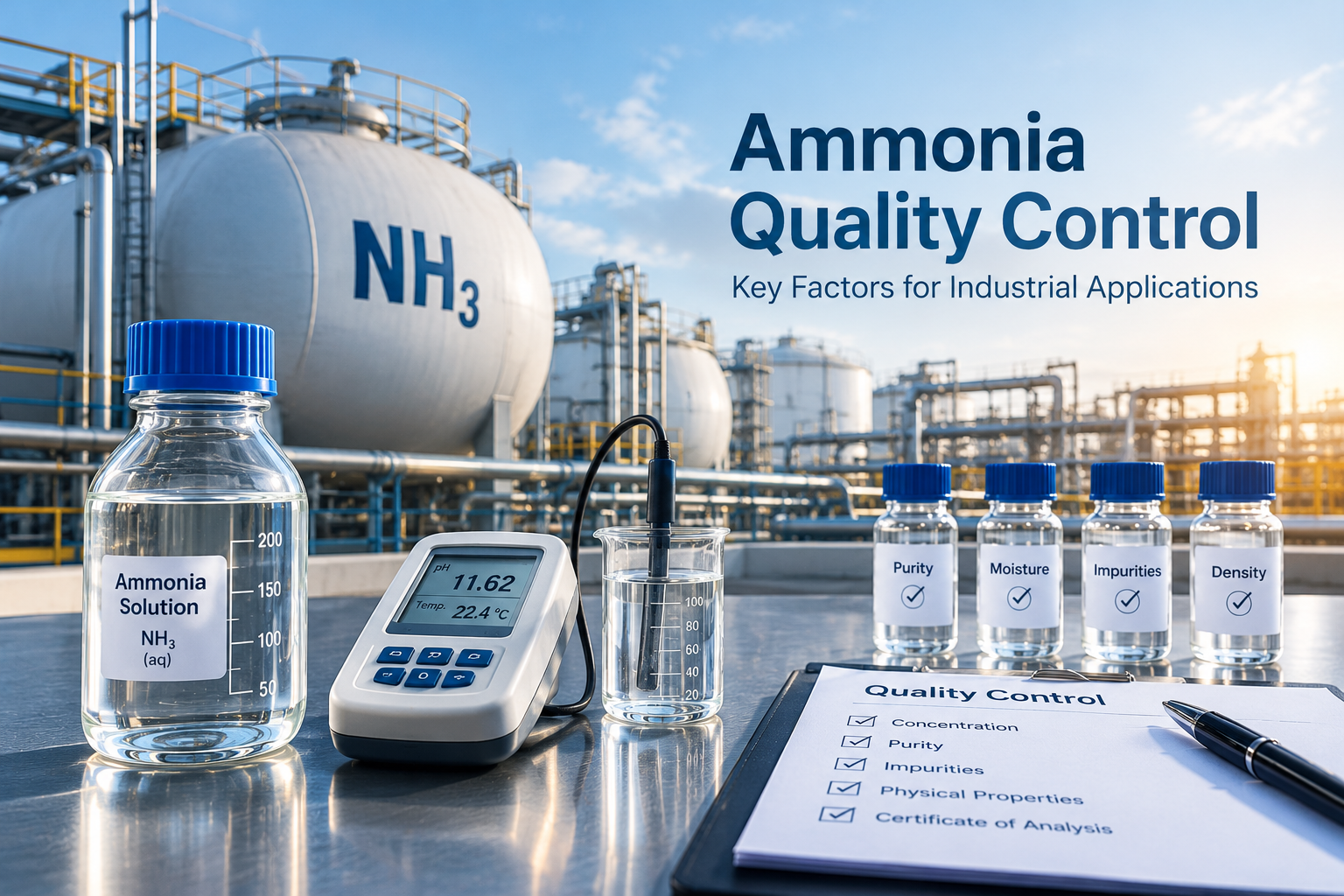
Ammonia Quality Control
Ammonia is an essential industrial chemical used in fertilizer production, water treatment, refrigeration, and various chemical manufacturing processes. However, its performance depends on more than concentration alone. Impurities, storage conditions, and product consistency can also influence its suitability for specific applications.
Therefore, ammonia quality control is a critical step in industrial procurement. Buyers need to evaluate technical specifications, verify product documentation, and ensure that the supplied material meets the requirements of the intended process. Understanding these factors helps manufacturers reduce operational risks and maintain consistent production quality.
Why Ammonia Quality Control Matters
Industrial processes often require ammonia with specific chemical and physical properties. Variations in product quality can affect reaction efficiency, equipment performance, and the consistency of the final product.
For example, ammonia used in refrigeration systems must meet the relevant purity and moisture requirements. Similarly, ammonia intended for chemical manufacturing may require strict limits on impurities that could interfere with downstream reactions.
Effective quality control helps businesses identify unsuitable products before they enter the production process. It also supports safer handling, more reliable operations, and better supplier management.
Concentration as a Primary Quality Parameter
Ammonia concentration is one of the most important parameters when evaluating aqueous ammonia solutions. It indicates the proportion of ammonia present in the solution and directly affects its chemical properties.
Different industrial applications require different concentrations. Consequently, buyers should confirm the specified concentration before placing an order.
For aqueous ammonia, concentration is commonly expressed as a percentage by mass. However, measurement methods and reporting conventions should be verified to avoid misunderstandings between suppliers and buyers.
Temperature can also influence the interpretation of density-based measurements. Therefore, density should not be used as the sole indicator of concentration without appropriate temperature correction and a validated measurement method.
Identifying Impurities in Industrial Ammonia
Impurities can affect ammonia quality even when the reported concentration meets the required specification. Their significance depends on the production process, intended application, and required product grade.
Potential contaminants in aqueous ammonia include dissolved salts, trace metals, and other substances introduced during production, transportation, or storage. In anhydrous ammonia, moisture and other specified contaminants may require particular attention.
The most relevant impurities should be identified according to the application. For example, sensitive chemical processes may require tighter impurity limits than general industrial cleaning applications.
Laboratory analysis provides a more reliable assessment than visual inspection alone. Buyers should request documented test results when purity requirements are critical.
Physical Properties Used in Quality Assessment
Physical properties provide useful information about ammonia products and can help identify inconsistencies.
For aqueous ammonia, relevant parameters may include density, appearance, concentration, and temperature-dependent characteristics. A clear appearance can be a useful preliminary observation, but it does not establish chemical purity.
Density measurements can support concentration verification when the correct reference temperature and validated conversion data are used. However, other dissolved substances may affect density and produce misleading results.
In addition, physical properties should be assessed using standardized procedures. Consistent testing methods make it easier to compare batches and identify deviations from agreed specifications.
Laboratory Testing and Analytical Methods
Laboratory testing is central to a reliable ammonia quality control program. The selected methods should match the product type and the limits established in the purchasing specification.
Depending on the application, testing may include concentration determination, density measurement, moisture analysis, and the assessment of specific impurities. Validated analytical procedures improve the reliability and repeatability of results.
Laboratories should also use properly calibrated instruments and suitable reference materials. Sampling procedures are equally important because an unrepresentative sample can produce misleading conclusions.
For bulk deliveries, buyers may establish sampling and acceptance procedures before shipment. These arrangements help prevent disagreements when the delivered product does not appear to meet the agreed requirements.

Storage Conditions and Their Effect on Quality
Appropriate storage helps maintain ammonia quality throughout the supply chain. However, the required storage arrangements differ significantly between aqueous ammonia and anhydrous ammonia.
Aqueous ammonia can lose dissolved ammonia through volatilization when storage conditions and equipment are unsuitable. This can change the solution’s concentration over time.
Anhydrous ammonia requires specifically designed pressure-rated systems because it is commonly stored as a liquefied gas under pressure. Materials, valves, seals, and pressure-control equipment must be suitable for the service conditions.
In both cases, contaminated equipment, incompatible materials, and poorly controlled transfers can compromise product integrity. Storage systems should therefore be inspected and maintained according to applicable engineering requirements.
Packaging and Transportation Requirements
Packaging and transportation are important parts of industrial ammonia quality assurance. Unsuitable containers or poorly managed transfers can introduce contamination, cause leakage, or alter the product’s condition.
Aqueous ammonia should be transported in compatible containers designed for the product’s concentration and relevant regulatory requirements. Anhydrous ammonia requires specialized equipment designed for its pressure and chemical hazards.
Before accepting a delivery, buyers should check container integrity, product identification, batch documentation, and the consistency of the supplied material with the purchase order.
For bulk deliveries, clear procedures for loading, unloading, sampling, and documentation can further reduce the risk of quality disputes.
Understanding Certificates of Analysis
A Certificate of Analysis (CoA) is an important document for evaluating industrial ammonia. It typically identifies the product and batch, lists selected test parameters, and reports the corresponding analytical results.
Buyers should review the certificate carefully rather than relying solely on a general statement of purity. The reported values must be compared with the agreed specification and the needs of the intended application.
A useful certificate should include the relevant test methods, units, acceptance limits where applicable, and traceable batch information. Buyers should also verify whether the document represents the actual delivered batch or a general product specification.
Where necessary, independent laboratory testing can provide additional assurance, particularly for high-volume purchases or applications with strict quality requirements.
How to Select a Reliable Ammonia Supplier
Supplier selection is an important part of quality control because consistent products depend on reliable sourcing, handling, and documentation.
Industrial buyers should consider several factors before making a purchasing decision:
- Product specifications: Confirm concentration, grade, and applicable impurity limits.
- Documentation: Request a relevant Certificate of Analysis and Safety Data Sheet.
- Batch consistency: Ask how product quality is monitored across deliveries.
- Supply capability: Verify the supplier’s ability to meet required quantities and delivery schedules.
- Transportation arrangements: Confirm that handling and delivery methods suit the product type.
- Technical communication: Choose a supplier that can clearly explain specifications and provide relevant product information.
Price remains an important consideration. Nevertheless, the lowest quotation may not represent the best overall value if product inconsistency creates additional testing, handling, or production costs.
A Practical Quality Control Checklist Before Purchase
Before ordering industrial ammonia, buyers can use a structured checklist to confirm that essential requirements have been addressed.
First, identify the intended application and determine the required product grade. Next, specify the required concentration and any critical impurity limits.
Then, request the relevant technical documentation and verify the batch identification. Confirm that the analytical methods and reported units are appropriate for comparing results with the purchasing specification.
Finally, review packaging, transportation, storage, and delivery arrangements. For large orders, establishing written acceptance criteria before shipment can help both parties manage expectations and resolve potential discrepancies.
This approach supports more consistent procurement decisions and reduces the likelihood of receiving a product that does not meet operational requirements.
Conclusion
Ammonia quality control involves much more than checking concentration. Impurity levels, analytical methods, storage conditions, transportation practices, and batch documentation all contribute to a reliable assessment of product suitability.
By establishing clear specifications and verifying relevant test results, industrial buyers can improve product consistency and reduce procurement risks. Careful supplier evaluation is equally important, particularly when purchasing ammonia in large quantities or for technically demanding applications.
For businesses seeking a dependable supply of industrial chemicals, Sipan Holding can be contacted to discuss ammonia supply requirements, product specifications, and purchasing arrangements.

