


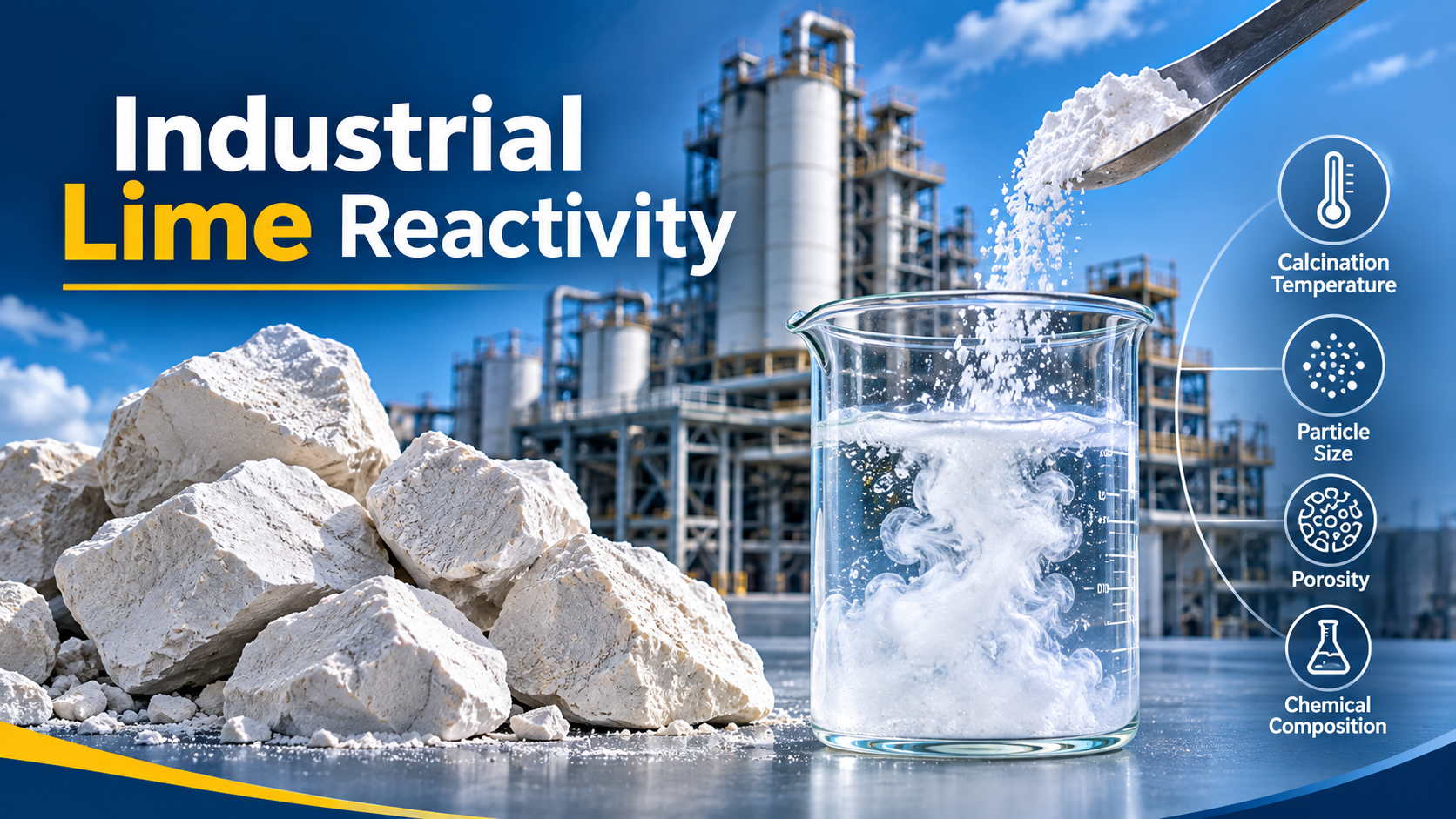
Industrial Lime Reactivity
Industrial lime is an essential chemical material used across several industrial sectors. Its performance depends not only on chemical composition but also on its ability to react under specific operating conditions. This property is commonly described as lime reactivity.
Reactivity determines how quickly and effectively lime interacts with water, acids, and other chemical compounds. Therefore, understanding this characteristic is important when selecting lime for industrial processes. It also helps manufacturers improve process efficiency, control chemical consumption, and achieve consistent production results.
Different types of industrial lime demonstrate different reaction behaviors. These differences are influenced by raw material quality, production temperature, particle structure, and processing conditions. Consequently, evaluating lime reactivity is an important step in determining product suitability for industrial applications.
What Does Industrial Lime Reactivity Mean?
Industrial lime reactivity refers to the ability of lime to participate in chemical reactions within a defined period and under specific conditions. In quicklime, which primarily consists of calcium oxide, reactivity is particularly important during hydration.
When calcium oxide comes into contact with water, it produces calcium hydroxide and releases heat. This reaction is known as slaking.
The speed and completeness of this reaction provide useful information about quicklime performance. Highly reactive quicklime generally hydrates faster under comparable testing conditions. However, high reactivity is not automatically suitable for every industrial application. The required reaction rate depends on the process design and operating requirements.
Reactivity should also be distinguished from purity. A product may contain a high percentage of calcium oxide but still demonstrate limited reaction performance because of its physical structure or manufacturing history.
Chemical Composition and Its Influence on Reactivity
Lorem ipsum dolor sit amet, consectetur adipiscing elit. Ut elit tellus, luctus nec ullamcorper mattis,
Chemical composition is one of the main factors affecting industrial lime performance. Calcium oxide is the primary active component of quicklime. Its concentration influences the amount of material available for chemical reactions.
However, other components can also affect reaction behavior. Magnesium oxide, silica, alumina, and iron compounds may influence the properties of the final product. Their effects depend on concentration, mineral distribution, and production conditions.
Impurities can reduce the proportion of reactive calcium oxide. In addition, certain mineral phases may influence hydration behavior and the formation of reaction products.
For this reason, chemical analysis is an important part of industrial lime evaluation. Buyers should consider available calcium oxide content, magnesium oxide levels, and relevant impurity limits rather than relying exclusively on the product’s commercial grade.
Key Factors Affecting Industrial Lime Reactivity
Several physical and chemical characteristics determine how industrial lime behaves during processing
Production Temperature
The temperature used during limestone calcination has a significant effect on quicklime reactivity. Calcination converts calcium carbonate into calcium oxide by releasing carbon dioxide.
Insufficient heating may result in incomplete decomposition. On the other hand, excessive temperatures or prolonged exposure can cause overburning. This condition may produce denser calcium oxide structures with reduced porosity and slower hydration.
Therefore, maintaining appropriate kiln conditions is essential for producing lime with consistent reaction characteristics.
Particle Size and Surface Area
Particle size directly influences the contact area available for chemical reactions. Smaller particles generally provide greater exposed surface area, allowing water or other reactants to interact with the material more efficiently.
Larger particles may require additional time for complete hydration because water must penetrate deeper into the material.
Nevertheless, particle size should be selected according to the intended application. Extremely fine particles may create handling difficulties, dust generation, or unwanted process variations.
Porosity and Internal Structure
The internal structure of quicklime plays an important role in determining its reaction behavior. Porous particles allow water to penetrate more easily, increasing contact between calcium oxide and the reacting medium.
In contrast, dense particles can restrict water penetration and slow down hydration.
Porosity is influenced by limestone characteristics, calcination conditions, and the physical transformations occurring during production. Therefore, two quicklime products with similar chemical compositions may demonstrate different reactivity levels.
Hydration Rate Testing
Hydration testing is one of the most common methods for evaluating quicklime reactivity. During this test, a controlled amount of water is added to a lime sample. Temperature changes are then monitored over a defined period.
The reaction releases heat, making temperature development a useful indicator of hydration behavior. Faster temperature increases generally indicate higher reactivity under identical test conditions.
Chemical Analysis
Chemical analysis identifies the composition of industrial lime. It helps determine calcium oxide content and the presence of other compounds that may influence performance.
Laboratory results provide valuable information about product consistency. They also help buyers compare different suppliers using measurable specifications.
Particle Size Distribution
Particle size analysis determines how lime particles are distributed across different size ranges. This information is important because particle dimensions influence surface area, hydration behavior, and material handling.
Consistent particle size distribution can contribute to more predictable performance in industrial operations.
The Importance of Reactivity in Industrial Applications
Industrial lime reactivity directly influences process efficiency in several sectors. Its importance varies depending on the chemical reactions involved.
In steel production, lime is used in metallurgical processes to support slag formation and remove unwanted impurities. Its reaction behavior can influence process control and material consumption.
In water treatment, lime participates in pH adjustment, water softening, and the removal of certain dissolved substances. Consistent reactivity helps maintain stable treatment conditions.
In chemical manufacturing, lime serves as a raw material and processing agent in different reactions. Its chemical behavior can affect production time, reaction efficiency, and final product quality.
Therefore, selecting lime with appropriate reactivity is essential for achieving reliable industrial results.
How to Select Industrial Lime Based on Reactivity
Choosing industrial lime requires more than comparing prices or calcium oxide percentages. Buyers should evaluate several technical parameters before placing an order.
First, the intended application should be clearly identified. Different processes require different reaction rates and physical characteristics.
Second, chemical specifications should be reviewed carefully. Calcium oxide content, magnesium oxide levels, and impurity concentrations provide important information about product quality.
Third, buyers should examine particle size and hydration characteristics. These properties help determine whether the material is compatible with existing industrial equipment.
Finally, consistency between different shipments should be considered. Reliable specifications and appropriate quality documentation reduce the risk of unexpected production variations.
Conclusion
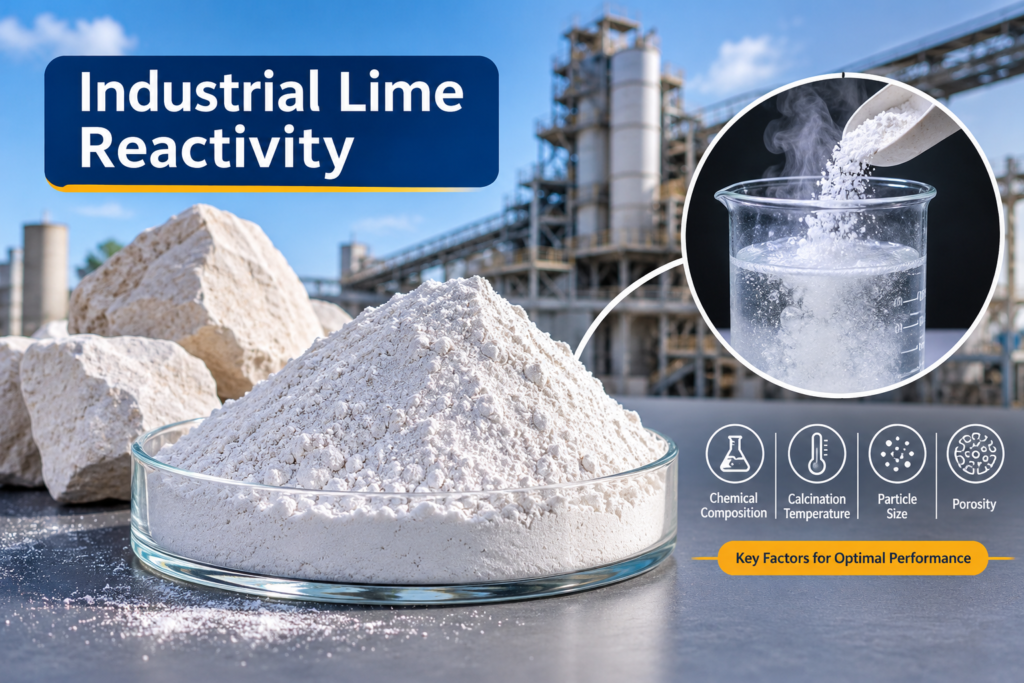
Industrial lime reactivity is a fundamental property that influences chemical performance, processing efficiency, and product suitability. Factors such as calcination temperature, particle size, porosity, and chemical composition determine how lime behaves during industrial reactions.
For industrial buyers, evaluating these characteristics provides a more reliable basis for selecting the appropriate product. In addition, reviewing laboratory specifications and supplier quality documentation helps minimize purchasing risks.
Sipan Holding focuses on supplying industrial chemical materials according to customer requirements. Selecting suitable industrial lime with attention to technical specifications and consistent quality is an important step toward improving industrial operations.

