



White Spirit Oxidation Stability
White Spirit is a widely used petroleum-based solvent in industrial applications, particularly in paint manufacturing, coatings, cleaning, and surface preparation. Its performance depends on several physical and chemical properties, including evaporation rate, solvency power, volatility, and chemical stability. Among these characteristics, oxidation stability plays an important role in maintaining product quality during storage and industrial use.
Oxidation stability refers to the ability of White Spirit to resist chemical changes caused by exposure to oxygen and other environmental factors. Although White Spirit is generally considered a stable hydrocarbon solvent, prolonged exposure to unfavorable conditions may gradually affect its composition and performance.
What Is Oxidation Stability in White Spirit?
Oxidation stability describes how effectively White Spirit maintains its original chemical characteristics when exposed to oxygen over time. Hydrocarbon components can undergo oxidation under certain conditions, particularly when exposed to elevated temperatures, light, or catalytic contaminants.
These reactions may gradually produce oxygen-containing compounds and other degradation products. Consequently, the solvent may experience changes in odor, color, and overall quality.
For industrial users, maintaining oxidation stability is important because changes in solvent composition can influence its compatibility with other materials and its performance in different formulations.
Factors Affecting White Spirit Oxidation Stability
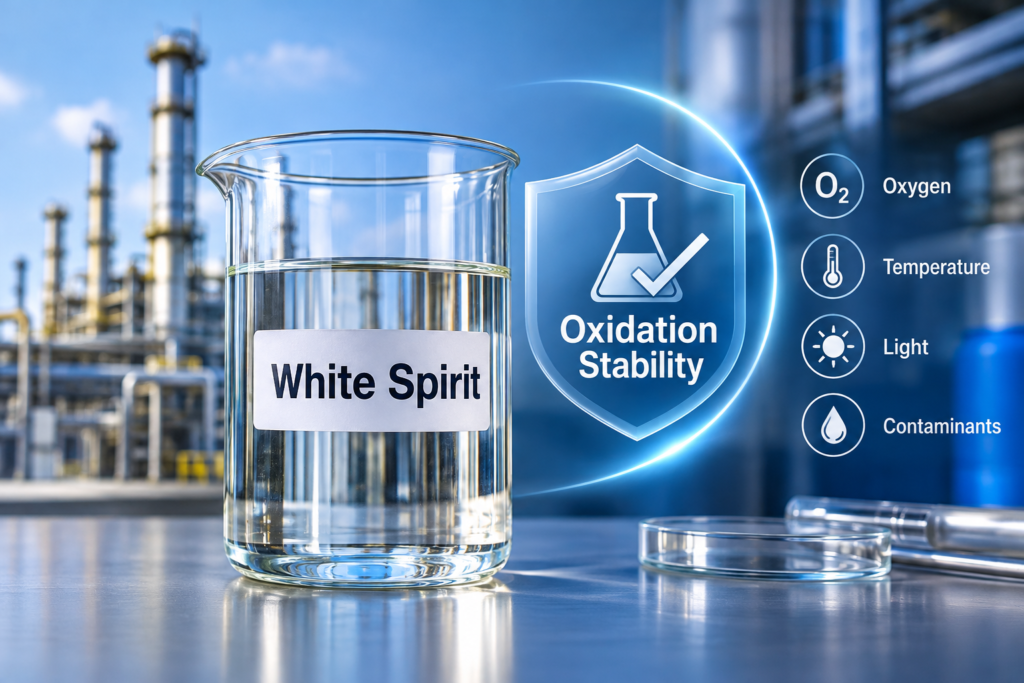
Several environmental and chemical factors influence the oxidation behavior of White Spirit. Understanding these factors helps manufacturers and industrial users maintain consistent product quality.
Exposure to Oxygen
Contact with atmospheric oxygen is one of the primary factors contributing to hydrocarbon oxidation. When White Spirit remains in partially filled containers, the available air inside the storage space can increase its exposure to oxygen.
Repeated opening and closing of containers may also introduce fresh air. Therefore, limiting unnecessary exposure to air is an important part of solvent storage management.
Temperature Conditions
Temperature significantly influences the rate of chemical reactions. Higher temperatures can accelerate oxidation processes and increase the possibility of gradual solvent degradation.
White Spirit should therefore be stored under controlled temperature conditions. Avoiding excessive heat helps preserve its original characteristics and reduces the risk of unwanted chemical changes.
Exposure to Light
Prolonged exposure to direct sunlight and certain light sources may contribute to chemical degradation. Light can promote reactions involving hydrocarbon components, particularly when oxygen is also present.
Using appropriate storage containers and keeping the product away from direct sunlight can help maintain its stability over time.
Presence of Contaminants
Contamination can influence the chemical stability of petroleum-based solvents. Certain metal residues and impurities may promote oxidation reactions or affect the behavior of degradation products.
Clean storage equipment and properly maintained transfer systems are therefore essential for preventing unwanted contamination.
Effects of Oxidation on White Spirit Performance
Oxidation can influence several characteristics of White Spirit. Although the extent of these changes depends on storage conditions and product composition, some effects may become noticeable during extended storage.
Changes in Color and Odor
One possible indication of oxidation is a gradual change in the appearance or smell of the solvent. Certain degradation products may contribute to yellowish discoloration or an unusual odor.
However, these changes are not definitive proof of oxidation because contamination and other storage-related factors can produce similar effects.
Changes in Chemical Composition
Oxidation may gradually alter the composition of hydrocarbon solvents. The formation of secondary compounds can affect the original chemical profile and influence the consistency of the product.
These changes are particularly important in industrial formulations where solvent composition must remain consistent.
Impact on Industrial Formulations
White Spirit is commonly incorporated into paint, varnish, and coating formulations. Changes in solvent quality may influence compatibility with formulation ingredients, application behavior, and final coating characteristics.
For this reason, oxidation stability is an important consideration when selecting solvents for applications that require consistent performance.
How to Improve White Spirit Oxidation Stability
Appropriate storage and handling practices can help reduce the factors responsible for oxidation.
- Use sealed containers: Keep storage containers tightly closed to minimize unnecessary contact with atmospheric oxygen.
- Control storage temperature: Avoid excessive heat and maintain suitable environmental conditions.
- Protect against sunlight: Store White Spirit away from direct sunlight and intense light exposure.
- Prevent contamination: Use clean containers, pipelines, and transfer equipment.
- Follow storage recommendations: Observe the manufacturer’s handling instructions and recommended storage conditions.
These measures help preserve product quality and reduce the possibility of premature degradation.
Importance of Oxidation Stability in Industrial Purchasing
For industrial buyers, oxidation stability is an important factor when evaluating White Spirit quality. Selecting a suitable product requires more than checking its appearance or general specifications.
Buyers should consider product consistency, storage history, technical documentation, and supplier reliability. These factors become particularly important for manufacturers that use White Spirit in large-scale production processes.
Reliable sourcing also helps reduce variations between different batches. Consequently, working with an experienced supplier can contribute to better quality control and more predictable industrial performance.
Conclusion
White Spirit oxidation stability is an important property that influences solvent quality during storage and industrial use. Exposure to oxygen, elevated temperatures, light, and contaminants can contribute to gradual chemical changes.
Proper storage practices and careful product selection help minimize these effects. For industrial manufacturers, evaluating solvent stability and purchasing from reliable suppliers are essential steps toward maintaining consistent production quality.
For purchasing high-quality White Spirit for industrial applications, contact Sipan Holding. Our team can assist you in selecting and supplying products according to your industrial requirements.

