
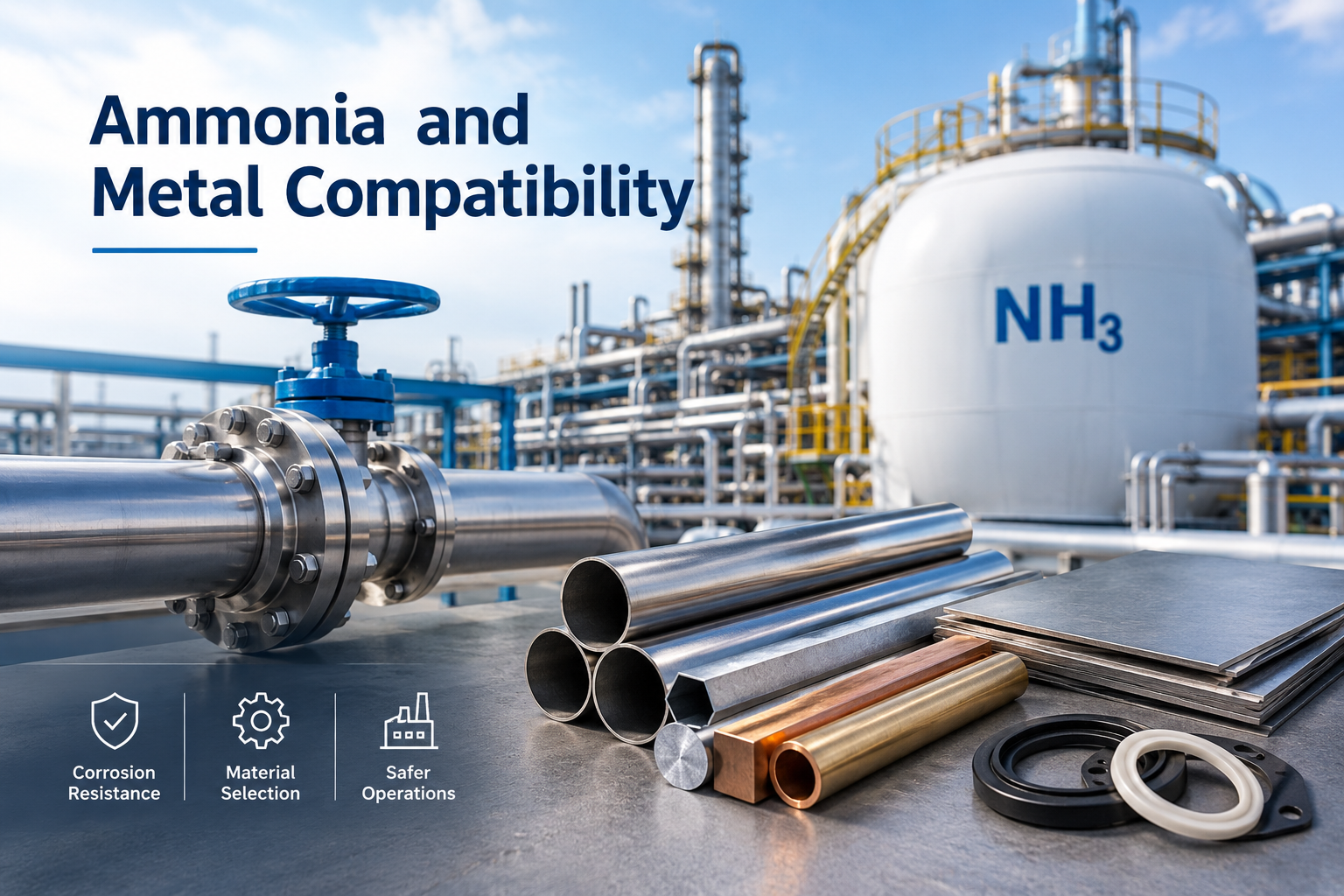
Ammonia and Metal Compatibility
Ammonia is an important industrial chemical used in fertilizer production, refrigeration systems, chemical manufacturing, and several other industrial processes. However, selecting suitable metals for equipment that comes into contact with ammonia is essential for operational safety, equipment reliability, and long-term performance.
Metal compatibility depends on several factors, including ammonia concentration, temperature, pressure, moisture content, and the presence of contaminants. Although some metals perform well in ammonia service, others may experience corrosion, cracking, or surface deterioration under specific conditions. Therefore, understanding these differences helps industrial buyers and engineers make better material selection decisions.
Why Metal Compatibility Matters in Industrial Ammonia Systems
Industrial ammonia is stored, transported, and processed using tanks, pipelines, valves, fittings, and pressure vessels. Each component must withstand its operating environment without compromising system integrity.
Incompatible materials can cause leaks, equipment failure, unexpected maintenance costs, and safety hazards. Furthermore, material degradation may contaminate the process stream and affect product quality.
Choosing appropriate metals from the beginning reduces the likelihood of premature failure. Nevertheless, compatibility should always be evaluated for the actual operating conditions rather than based solely on the metal’s general reputation for corrosion resistance.
How Ammonia Interacts with Different Metals
Ammonia does not affect every metal in the same way. Its behavior depends on the metal’s chemical properties and the conditions under which the two materials come into contact.
Carbon Steel
Carbon steel is widely used in industrial ammonia storage and transportation systems. Under suitable conditions, it can provide reliable mechanical strength and acceptable compatibility with anhydrous ammonia.
However, carbon steel is not immune to every form of damage. Anhydrous ammonia systems can experience stress corrosion cracking under certain conditions, particularly when tensile stress and other contributing factors are present. Oxygen contamination and operating conditions may influence this risk.
Consequently, material selection should consider design codes, fabrication quality, stress management, and appropriate inspection procedures.
Stainless Steel
Stainless steel is used in various chemical processing applications because of its strength and corrosion resistance. Certain grades can perform well in ammonia service, depending on the operating environment.
However, stainless steel is not automatically the best choice for every ammonia application. Grade selection, temperature, pressure, impurities, and mechanical requirements must all be evaluated.
Engineers should verify the compatibility of the specific stainless steel grade with the intended service conditions before selecting it for industrial equipment.
Copper and Copper Alloys
Copper, brass, and bronze generally require particular caution in ammonia applications. Ammonia can react with copper and certain copper alloys, potentially causing corrosion or other forms of material degradation.
In some environments, ammonia exposure can contribute to stress corrosion cracking in copper alloys. The risk depends on factors such as moisture, temperature, material condition, and mechanical stress.
For this reason, copper-containing components should not be selected for ammonia service without specific compatibility verification. Alternative materials may offer a more appropriate solution.
Aluminum and Zinc-Coated Materials
Aluminum can be compatible with ammonia under certain conditions, but its suitability depends on the specific alloy, moisture content, temperature, and other environmental factors.
Zinc-coated materials, including galvanized steel, require additional consideration because ammonia-containing environments can affect zinc coatings under certain conditions. Damage to the protective coating may expose the underlying metal and reduce its intended protection.
Therefore, both aluminum alloys and galvanized components should be assessed individually rather than treated as universally suitable or unsuitable.
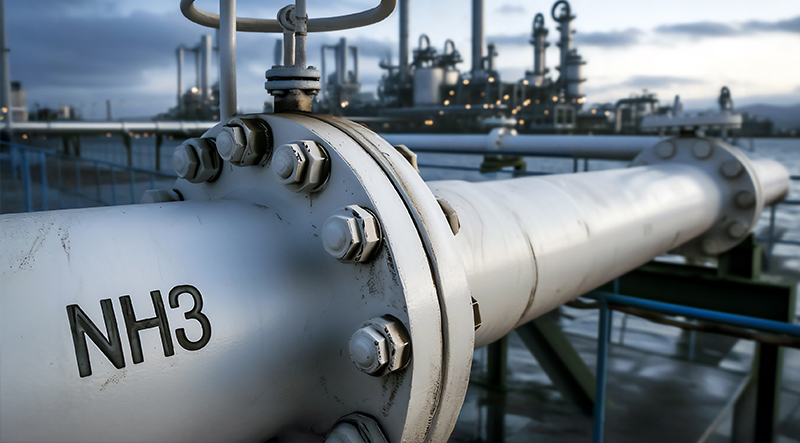
Key Factors Affecting Ammonia and Metal Compatibility
Several operating variables influence how metals behave when exposed to industrial ammonia.
Ammonia Concentration
Ammonia concentration can influence the chemical environment surrounding a metal. Anhydrous ammonia and aqueous ammonia do not necessarily produce the same material compatibility conditions.
For example, the presence of water changes the chemistry of the system and may affect corrosion mechanisms. Therefore, engineers must distinguish between anhydrous ammonia and ammonia solutions when evaluating equipment materials.
Temperature and Pressure
Temperature can affect reaction rates, material properties, and the behavior of contaminants. Pressure, meanwhile, influences equipment design and the mechanical stresses experienced by tanks, pipelines, and fittings.
Higher operating demands may require stricter engineering controls and more careful material selection. However, temperature or pressure alone cannot determine whether a particular metal is compatible with ammonia.
Moisture and Contaminants
Water, oxygen, and other contaminants can significantly influence material performance. Their effects depend on the metal, ammonia condition, and operating environment.
Even when a metal performs well in a controlled system, contamination may introduce additional corrosion or cracking risks. Maintaining suitable process conditions and monitoring chemical purity can therefore support equipment reliability.
How to Select Suitable Metals for Industrial Ammonia
Selecting compatible materials requires a systematic assessment of the application. Industrial buyers should work with qualified engineers and suppliers to verify that the selected materials meet the technical requirements.
The following considerations are particularly important:
- Identify the ammonia type: Determine whether the application involves anhydrous ammonia or an aqueous solution, and establish the expected concentration.
- Define operating conditions: Document temperature, pressure, moisture levels, and potential contaminants.
- Verify metal compatibility: Evaluate the specific metal grade against recognized technical guidance and applicable engineering standards.
- Consider mechanical stress: Account for fabrication, welding, residual stress, and loading conditions that could contribute to cracking.
- Check all system components: Assess valves, seals, gaskets, fittings, and connected equipment rather than evaluating pipelines or tanks alone.
- Plan inspection and maintenance: Establish suitable inspection intervals and monitoring procedures based on the system’s design and risk profile.
Following these steps helps reduce uncertainty and supports safer, more reliable ammonia handling.
Common Mistakes in Material Selection
One common mistake is assuming that a metal suitable for one ammonia application will perform equally well in every other application. In reality, differences in moisture, temperature, concentration, and contaminants can change compatibility.
Another mistake is choosing materials based only on initial purchase price. Although lower-cost components may reduce upfront expenses, premature deterioration can increase maintenance costs and interrupt operations.
Ignoring seals and auxiliary components is also problematic. A compatible metal pipeline does not guarantee that its gaskets, valve seats, and other components are suitable for ammonia exposure.
Finally, relying on general corrosion resistance without considering stress corrosion cracking can lead to incomplete risk assessments. Material selection should address both chemical compatibility and mechanical integrity.
The Role of Material Compatibility in Industrial Safety
Ammonia requires careful handling because exposure can harm people and releases may create serious operational hazards. Equipment integrity is therefore an important part of industrial safety management.
Appropriate material selection should be supported by engineering design, suitable pressure protection, leak detection where required, ventilation, and established emergency procedures. Regular inspection can help identify deterioration before it develops into a more serious problem.
Moreover, personnel responsible for storage and transportation should follow applicable safety regulations and equipment manufacturers’ instructions. No single metal or material choice can replace a comprehensive ammonia safety program.
Conclusion
Ammonia and metal compatibility is an important consideration in the design, purchase, and maintenance of industrial chemical systems. Carbon steel and certain stainless steel grades can be suitable for specific ammonia applications, while copper alloys and zinc-coated materials may present compatibility concerns. Aluminum suitability also depends on the exact conditions.
Ultimately, concentration, moisture, temperature, pressure, contaminants, and mechanical stress must be evaluated together. Careful material selection can improve equipment reliability, reduce maintenance requirements, and support safer industrial operations.
For industrial ammonia supply inquiries and technical purchasing assistance, contact Sipan Holding to discuss your requirements and identify a suitable supply solution.

