


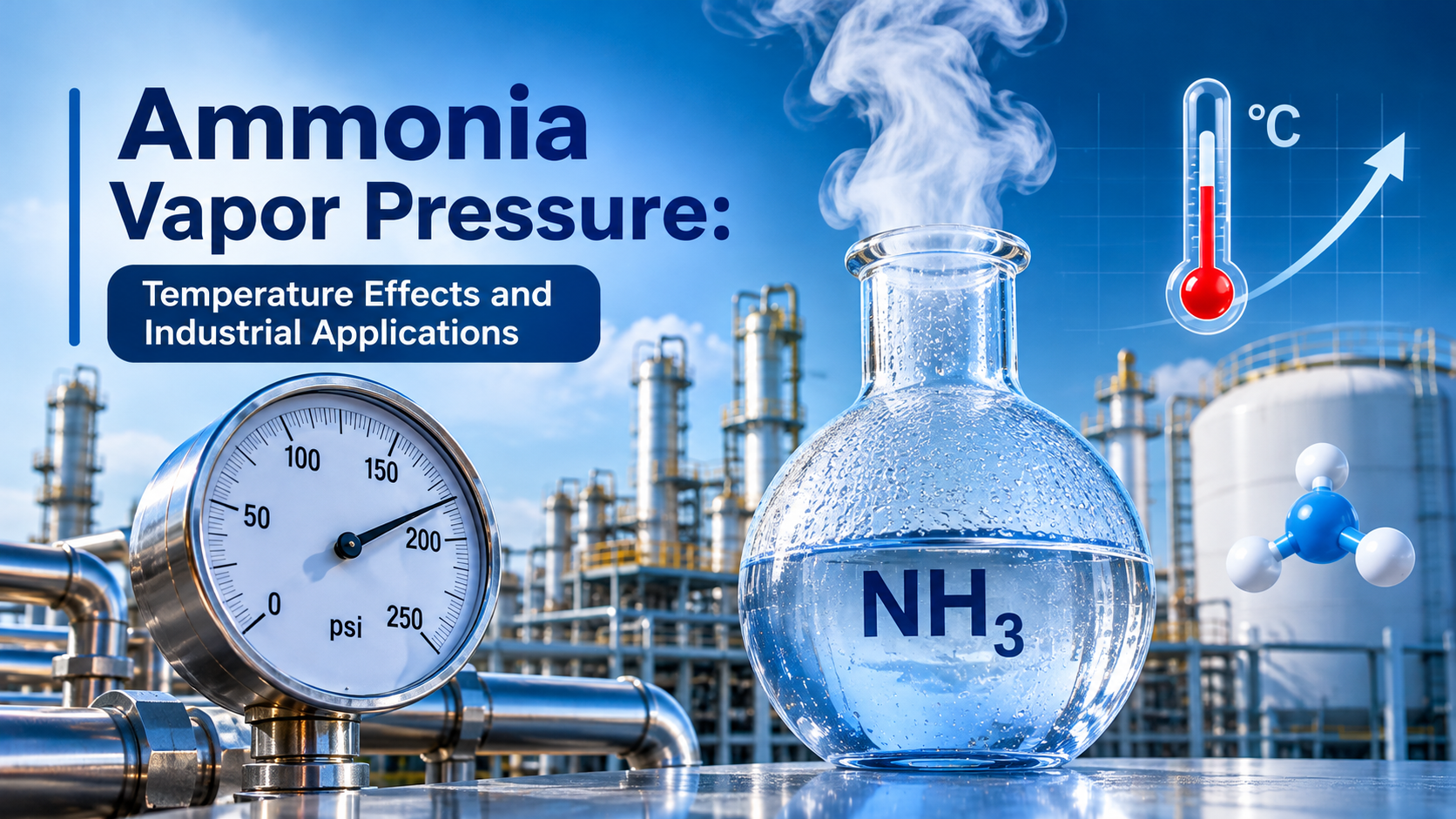
Ammonia Vapor Pressure: Temperature Effects
Ammonia vapor pressure is an important physical property influencing industrial storage, transportation, refrigeration, and chemical processing. It describes the pressure exerted by ammonia vapor when it reaches equilibrium with its liquid phase at a specific temperature.
Understanding this property helps industrial operators evaluate pressure variations and select suitable storage conditions. Moreover, temperature changes can significantly affect ammonia behavior inside pressurized equipment.
For manufacturers, distributors, and industrial buyers, vapor pressure is an essential parameter when assessing ammonia handling requirements. Therefore, understanding its relationship with temperature and concentration supports safer and more efficient industrial operations.
What Determines Ammonia Vapor Pressure?
Vapor pressure represents the pressure created by vapor molecules above a liquid when evaporation and condensation reach equilibrium. In ammonia systems, this property depends primarily on temperature and chemical composition.
Anhydrous ammonia has a relatively high vapor pressure because of its strong tendency to enter the gas phase. Consequently, it can remain liquid at ordinary industrial temperatures when sufficient pressure is maintained.
The relationship between vapor pressure and temperature is fundamental to understanding ammonia storage and processing behavior.
The Relationship Between Temperature and Vapor Pressure
Temperature has a direct influence on ammonia vapor pressure. As temperature increases, ammonia molecules gain kinetic energy, allowing more molecules to escape from the liquid phase.
This process increases the number of gas molecules above the liquid surface. As a result, the equilibrium vapor pressure rises.
Conversely, reducing temperature decreases molecular energy and lowers the equilibrium vapor pressure.
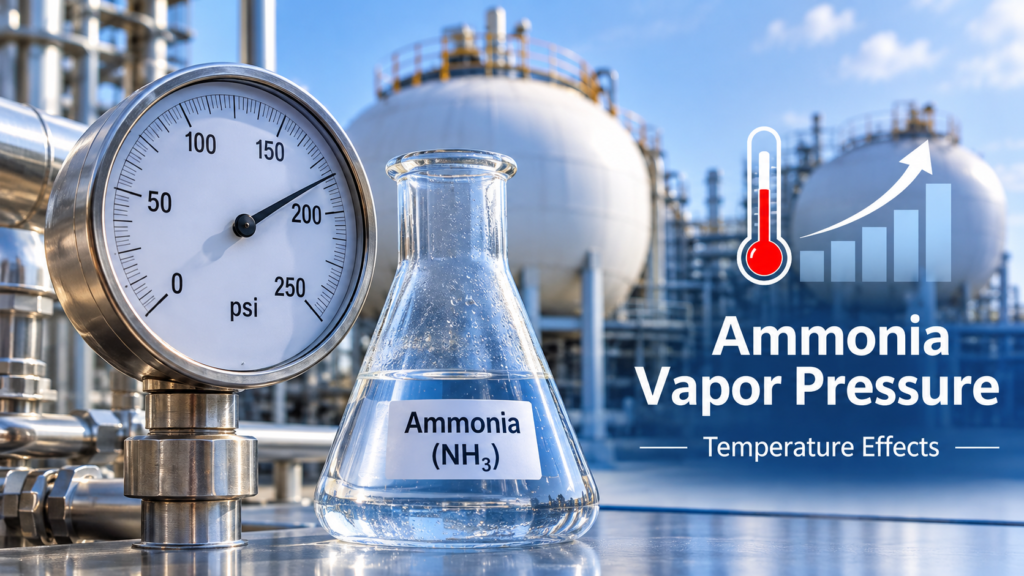
According to industrial reference data, anhydrous ammonia experiences substantial pressure changes across relatively small temperature intervals. For example, OSHA reports approximately 110 psi vapor pressure at 68°F and 198 psi at 100°F.
Occupational Safety and Health Administration+1
These variations demonstrate why temperature monitoring is essential in pressurized ammonia storage systems.
Vapor Pressure of Anhydrous and Aqueous Ammonia
Ammonia is commercially available in different concentrations, and its physical properties vary according to composition.
Anhydrous Ammonia
Anhydrous ammonia contains almost entirely NH₃ and exhibits relatively high vapor pressure. At ordinary temperatures, it requires pressurized storage or refrigeration to maintain its liquid state.
Aqueous Ammonia
Aqueous ammonia consists of ammonia dissolved in water. Its vapor pressure depends on both temperature and ammonia concentration.
Generally, adding water changes the equilibrium behavior and reduces ammonia’s partial pressure compared with pure ammonia under comparable conditions.
However, the vapor pressure of an aqueous solution cannot be determined using pure ammonia data alone. Both composition and temperature must be considered.
The Role of Molecular Behavior in Vapor Pressure
Ammonia molecules continuously move between liquid and vapor phases. Their movement determines the equilibrium established inside a closed storage system.
When liquid ammonia receives heat, molecular movement increases. More molecules overcome intermolecular attractions and enter the vapor phase.
At the same time, some vapor molecules return to the liquid through condensation. Eventually, equilibrium develops between evaporation and condensation.
This dynamic process explains why vapor pressure changes with temperature rather than remaining constant.
Furthermore, ammonia’s molecular interactions and physical properties influence its phase equilibrium under different operating conditions.
Ammonia Vapor Pressure and the Boiling Point
The boiling point is closely connected to vapor pressure. A liquid begins boiling when its vapor pressure becomes equal to the surrounding absolute pressure.
At atmospheric pressure, pure ammonia has a boiling point of approximately −33.3°C.
However, increasing external pressure raises the temperature required for boiling. This principle allows anhydrous ammonia to remain liquid at temperatures considerably above its normal boiling point.
This relationship is particularly important in refrigeration systems and industrial storage vessels.
Engineers use pressure-temperature relationships to evaluate operating conditions and prevent unwanted phase changes.
Industrial Applications of Ammonia Vapor Pressure
Ammonia vapor pressure influences several industrial processes. Understanding its behavior helps engineers manage equipment performance and operating conditions.
Important applications include:
- Industrial Refrigeration: Vapor pressure relationships support the design and operation of ammonia refrigeration cycles.
- Chemical Manufacturing: Pressure-temperature data help control ammonia handling during chemical processing.
- Storage Systems: Vapor pressure calculations support equipment selection and pressure management.
- Industrial Transportation: Temperature variations influence pressure conditions inside ammonia transport vessels.
- Process Engineering: Phase equilibrium data assist engineers in evaluating gas-liquid separation and process efficiency.
These applications demonstrate that vapor pressure is not simply a theoretical property. It directly influences practical industrial decisions.
Storage Conditions and Pressure Management
Proper storage conditions are essential for maintaining ammonia quality and controlling operational risks.
Temperature fluctuations can increase internal pressure, particularly in vessels containing liquid anhydrous ammonia. Therefore, storage facilities require appropriately designed pressure-rated equipment and suitable monitoring systems.
Several factors should be considered:
- Maintaining suitable storage temperatures.
- Using compatible and pressure-rated equipment.
- Installing appropriate pressure relief systems.
- Monitoring pressure and temperature continuously.
- Following established industrial handling procedures.
Additionally, ammonia storage areas require effective ventilation and suitable emergency response arrangements.
Because ammonia is toxic and can cause severe exposure injuries, pressure management must always be combined with appropriate safety measures.
Industrial Ammonia Supply by Sipan Holding
Reliable ammonia supply requires attention to product specifications, concentration, quality, and transportation requirements.
Sipan Holding focuses on supplying industrial chemical products and supporting buyers in selecting suitable materials for their operational requirements.
When purchasing industrial ammonia, customers should clearly identify the required concentration, quantity, and intended application. These details help establish appropriate product specifications and supply arrangements.
Working with a reliable supplier also helps industrial buyers improve purchasing decisions and manage their chemical supply requirements more effectively.
Conclusion
Ammonia vapor pressure plays an important role in determining the physical behavior and industrial handling requirements of ammonia.
Temperature, concentration, and phase equilibrium directly influence pressure conditions in storage and processing systems. Therefore, understanding these relationships is essential for industrial engineers, manufacturers, and chemical buyers.
Accurate vapor pressure data support better equipment selection, storage management, and operational safety. For industrial ammonia supply and purchasing inquiries, contact Sipan Holding to discuss your requirements and suitable supply options.

