



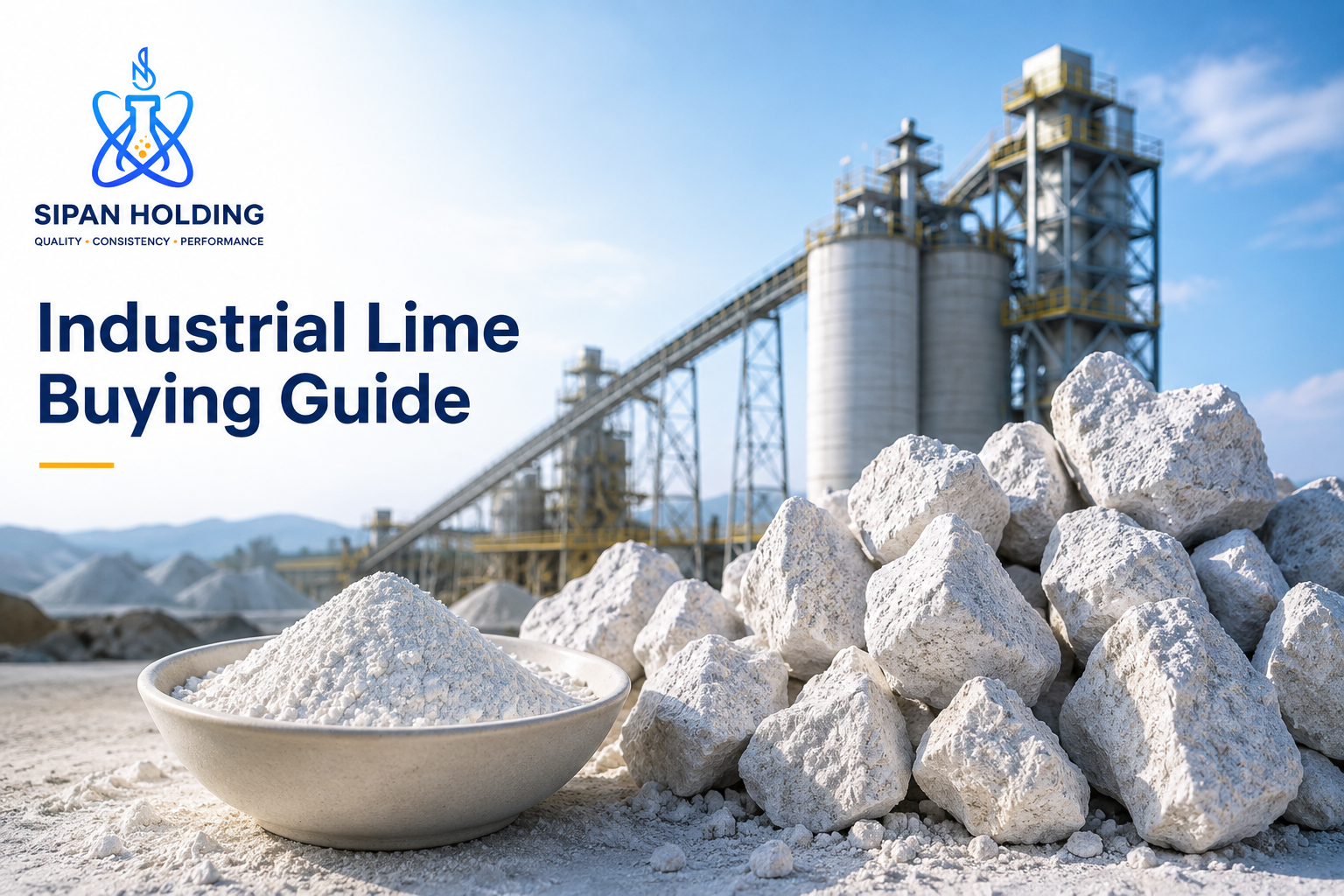
Industrial Lime Buying Guide
Industrial lime is an essential material for many manufacturing and processing industries. Its chemical properties make it valuable across several industrial applications. However, choosing the right lime requires attention to quality, specifications, packaging, and supplier reliability. Therefore, buyers should evaluate several factors before placing a bulk order. This Industrial Lime Buying Guide explains the most important considerations for purchasing industrial lime.
For industrial buyers, product consistency is especially important during long-term production. Moreover, reliable quality can help maintain stable production processes and reduce operational problems. Therefore, understanding product specifications should be the first step before purchasing industrial lime.
What Is Industrial Lime?
Industrial lime refers to lime products manufactured for use in different industrial processes. The most common forms include quicklime and hydrated lime. Each type has different chemical properties and applications.
Quicklime, also known as calcium oxide, is produced by heating limestone at high temperatures. Meanwhile, hydrated lime, or calcium hydroxide, is produced by adding water to quicklime. Consequently, each product should be selected according to the requirements of the intended application.
Industrial lime can support processes such as water treatment, steel production, construction, chemical manufacturing, and environmental applications. Therefore, buyers should identify the required lime type before comparing suppliers.
Choose the Right Type of Industrial Lime
Selecting the correct lime type is one of the most important purchasing decisions. Quicklime and hydrated lime cannot always replace each other in industrial processes.
Quicklime generally provides high reactivity and strong chemical performance. It is widely used in steelmaking, mineral processing, and several chemical processes. Hydrated lime offers different handling and application characteristics.
Before ordering, buyers should review their production requirements carefully. Additionally, technical teams should confirm the required calcium content, reactivity, and physical characteristics.
Quicklime
Quicklime contains calcium oxide as its primary chemical component. It reacts with water and produces heat during hydration. Therefore, proper handling and storage are essential.
Industrial buyers commonly use quicklime in steelmaking, water treatment, mining, and chemical production. Its performance depends strongly on purity and reactivity.
Hydrated Lime
Hydrated lime mainly consists of calcium hydroxide. It is commonly supplied as a dry powder with controlled particle characteristics. Moreover, it offers practical advantages for several treatment and construction applications.
Hydrated lime is used in water treatment, chemical production, construction, and environmental processes. Buyers should check its purity and particle size before purchasing.
Check Industrial Lime Quality and Purity
Quality is a critical factor when purchasing industrial lime in bulk quantities. Even small variations can affect industrial processes and final product performance.
Buyers should review the calcium oxide or calcium hydroxide content. They should also check magnesium oxide, silica, moisture, and other relevant components.
Furthermore, the level of impurities should match the intended application. High-purity lime may be necessary for sensitive chemical or industrial processes.
A reliable supplier should provide technical specifications for every product. These specifications help buyers compare different products using consistent criteria.
Evaluate Reactivity and Physical Properties
Chemical composition alone does not determine lime performance. Reactivity, particle size, moisture content, and physical structure can also influence results.
For quicklime, reactivity is particularly important in many industrial processes. A highly reactive product can provide faster and more consistent chemical performance.
Particle size also affects handling and reaction speed. Therefore, buyers should select particle specifications according to their production equipment.
Additionally, moisture should remain within acceptable limits. Excessive moisture can affect product quality, storage conditions, and transportation efficiency.
Consider Packaging and Bulk Supply
Packaging becomes increasingly important when purchasing industrial lime in large quantities. The appropriate packaging protects the material during transportation and storage.
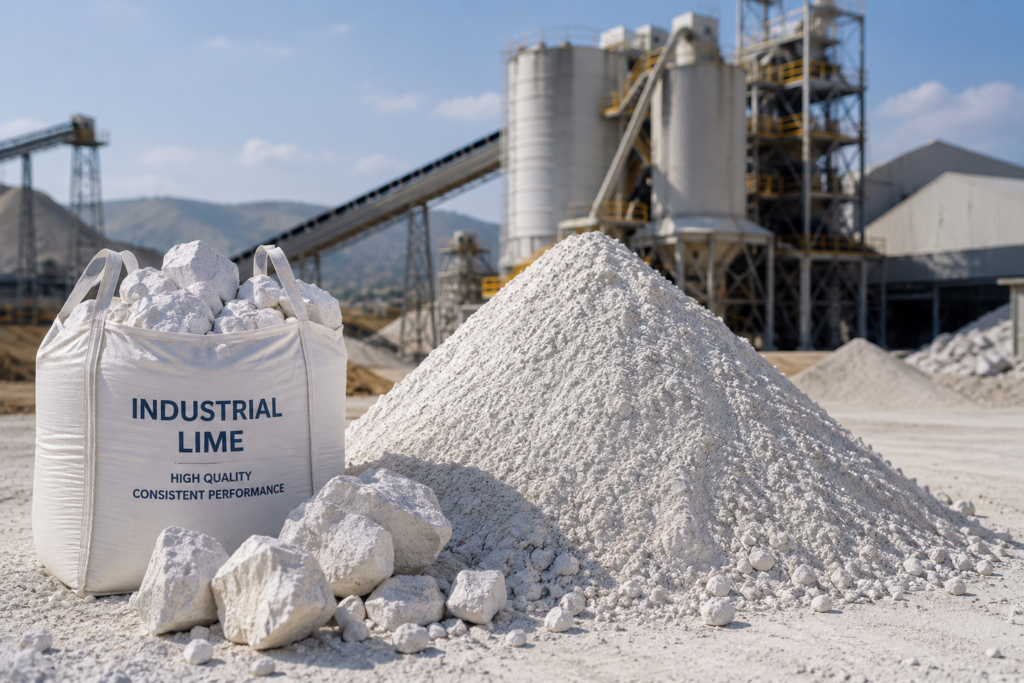
Industrial lime may be supplied in bags, jumbo bags, or bulk shipments. The right option depends on consumption volume and available storage facilities.
For large industrial operations, bulk delivery can improve logistics efficiency. However, suitable storage equipment should be available at the receiving facility.
Buyers should also confirm loading procedures and transportation requirements. This approach helps prevent unnecessary delays during delivery.
Select a Reliable Industrial Lime Supplier
Supplier selection can directly affect product availability and purchasing efficiency. Therefore, buyers should evaluate suppliers beyond the quoted price.
A reliable supplier should demonstrate consistent product quality and clear technical specifications. Furthermore, transparent communication can simplify purchasing and technical coordination.
Buyers should review the supplier’s production capacity and export experience. They should also confirm available packaging options and delivery capabilities.
For international purchases, documentation is another important consideration. Commercial invoices, certificates, technical documents, and shipping information should be properly prepared.
Compare Price and Total Purchasing Cost
Price is important, but it should not be the only purchasing criterion. A lower product price may involve additional logistics or quality-related costs.
Buyers should calculate the total purchasing cost before making a decision. This calculation can include product price, packaging, transportation, insurance, and other expenses.
Moreover, consistent quality can reduce production losses and unexpected operational costs. Therefore, purchasing decisions should consider both price and long-term value.
Bulk purchasing may also provide better commercial conditions. However, buyers should ensure that storage capacity matches the planned order volume.
Storage Requirements for Industrial Lime
Proper storage is essential for maintaining industrial lime quality. Lime should be protected from moisture and unsuitable environmental conditions.
Quicklime requires particular attention because it reacts with water. Exposure to moisture can change its chemical properties and reduce product performance.
Hydrated lime should also be stored in dry and controlled conditions. Suitable packaging can provide additional protection during storage.
Consequently, buyers should prepare appropriate storage facilities before receiving large shipments. This step can help maintain product quality throughout the storage period.
Why Technical Specifications Matter
Technical specifications provide essential information about industrial lime quality. They allow buyers to compare products objectively before placing an order.
Important specifications may include chemical composition, purity, particle size, moisture, and reactivity. The required parameters depend on the final application.
Buyers should communicate their technical requirements clearly to the supplier. This practice reduces misunderstandings and improves product selection.
Additionally, requesting samples can help evaluate product suitability before a large purchase. Sample testing is especially useful for new supplier relationships.
Buying Industrial Lime from Sipan Holding
Choosing an experienced supplier can simplify the industrial lime purchasing process. Sipan Holding can support buyers seeking industrial raw materials for different applications.
The company can assist with product specifications, bulk purchasing, and international supply requirements. Moreover, clear communication can help buyers identify suitable products for their operations.
Before ordering, customers should provide their required specifications and expected volume. This information helps suppliers prepare an appropriate commercial and technical proposal.
Conclusion
Buying industrial lime requires more than comparing prices between different suppliers. Product type, purity, reactivity, packaging, storage, and delivery should all be considered.
A clear understanding of technical requirements can help buyers select suitable industrial lime. Furthermore, reliable suppliers can support consistent quality and smoother purchasing processes.
For bulk requirements, Sipan Holding can provide industrial lime supply and export solutions. Contact Sipan Holding to discuss specifications, quantities, packaging, and purchasing requirements.

