
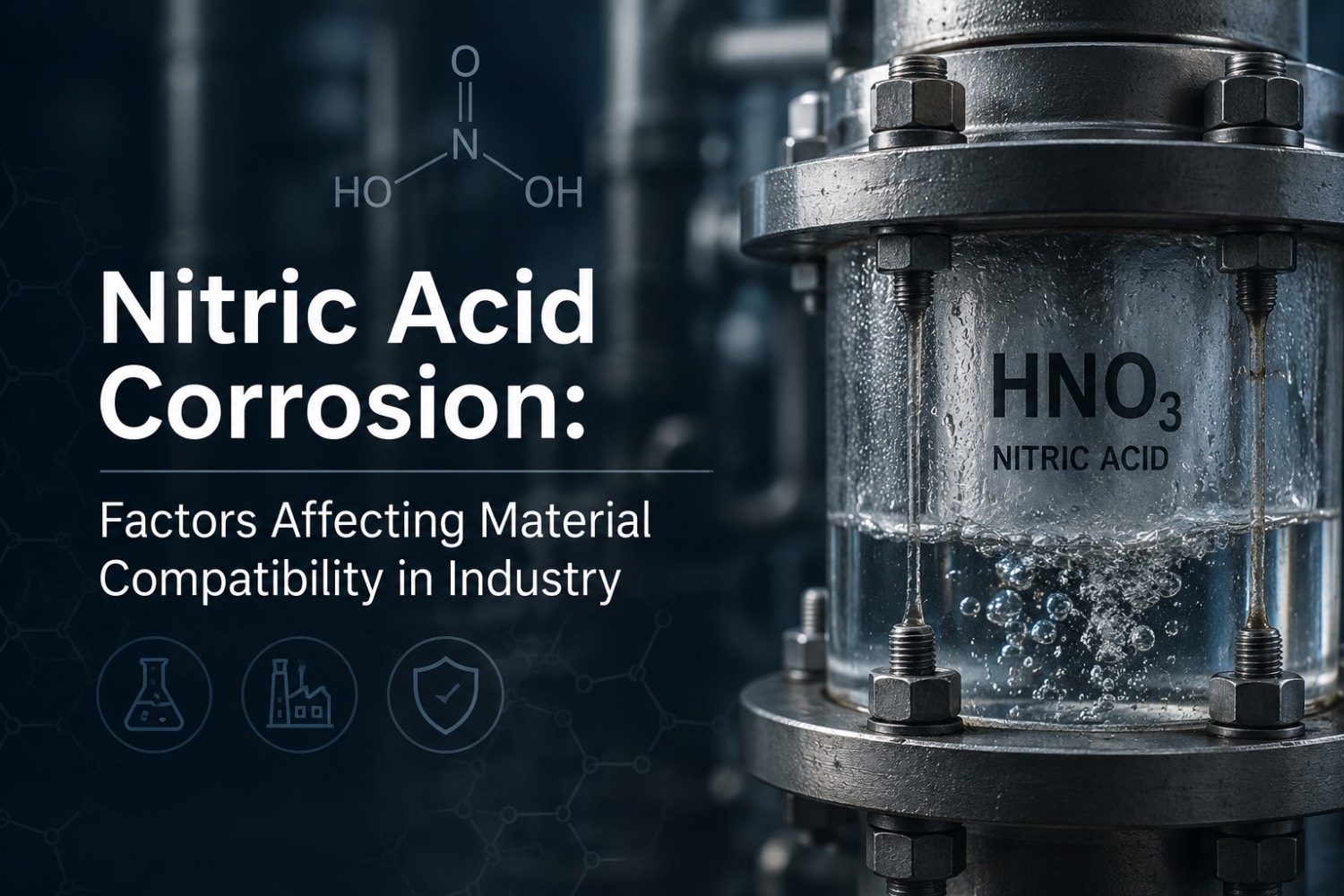
Nitric Acid Corrosion: Factors Affecting Material Compatibility in Industry
Nitric acid is widely used in chemical manufacturing, metal processing, fertilizer production, and other industrial applications. However, its corrosive behavior can create significant challenges when selecting equipment, storage tanks, pipelines, and process components. Understanding how nitric acid interacts with different materials helps industries improve operational safety, equipment durability, and process reliability.
What Is Nitric Acid Corrosion?
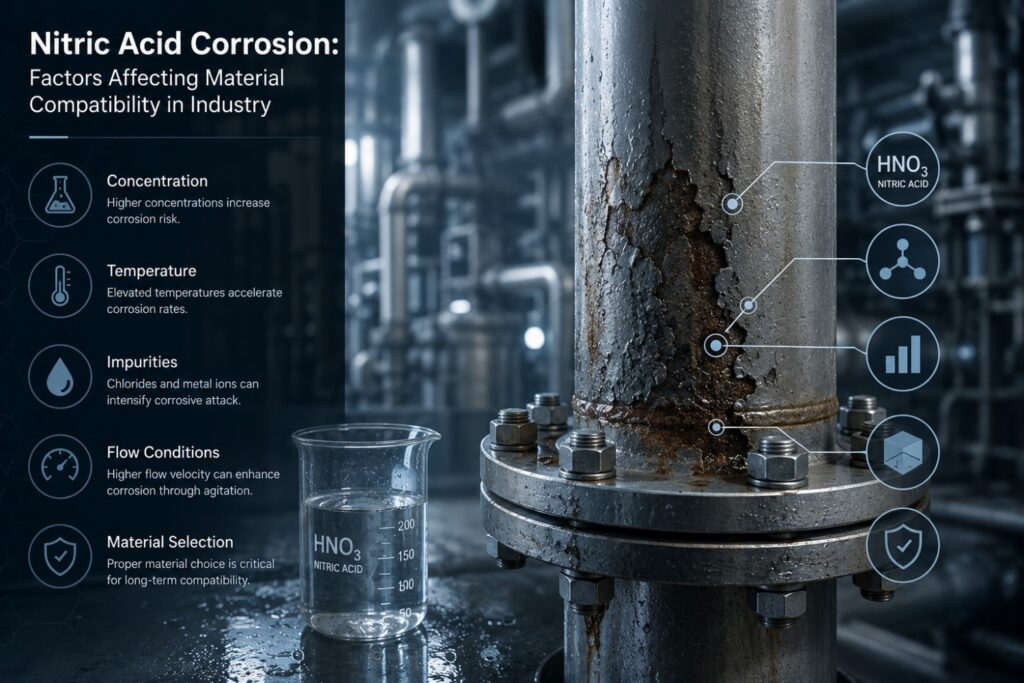
Nitric acid corrosion refers to the chemical deterioration of materials exposed to nitric acid under specific operating conditions. As a strong oxidizing acid, nitric acid behaves differently from many other industrial acids. Its effects depend on concentration, temperature, material composition, and the presence of other chemicals.
Unlike some acids that primarily dissolve metals through direct chemical reactions, nitric acid can promote the formation of protective oxide layers on certain metals. This process, known as passivation, can reduce corrosion under suitable conditions. Nevertheless, the protective effect is not universal and may disappear when operating conditions change.
The Role of Nitric Acid Concentration
Concentration is one of the most important factors influencing nitric acid corrosion. Dilute and concentrated solutions can produce different corrosion behaviors, even when they contact the same material.
For example, some stainless steels may develop a protective passive layer in concentrated nitric acid under appropriate conditions. However, dilute solutions may cause different corrosion rates depending on temperature and the steel grade. Therefore, concentration alone cannot determine whether a material is suitable.
Industrial operators should evaluate the exact concentration range expected during storage, transportation, and processing. They should also consider possible dilution caused by water ingress or cleaning procedures.
Temperature and Corrosion Rate
Temperature can significantly affect the interaction between nitric acid and industrial materials. In many systems, higher temperatures accelerate chemical reactions and increase the rate of material degradation.
Elevated temperatures may also influence the stability of protective oxide films. Consequently, a metal that performs adequately at ambient temperature may experience unacceptable corrosion under hotter operating conditions.
For this reason, equipment selection should account for normal operating temperatures, potential temperature fluctuations, and abnormal process conditions. Testing under representative conditions can provide more reliable information than general material classifications.
Why Stainless Steel Can Resist Nitric Acid
Stainless steel is commonly considered for nitric acid service because chromium can form a thin, protective oxide layer on its surface. This layer helps prevent further oxidation under suitable environmental conditions.
However, not every stainless steel grade offers the same resistance. Differences in chromium content, alloy composition, manufacturing quality, and surface condition can affect performance.
Furthermore, contamination, crevices, deposits, and unfavorable operating conditions may compromise corrosion resistance. Engineers should therefore select a specific grade based on documented compatibility data rather than relying on the term “stainless steel” alone.
The Limitations of Carbon Steel
Carbon steel is widely used in industrial equipment because of its strength, availability, and relatively low cost. However, it generally lacks the protective chromium-rich passive layer associated with stainless steel.
When exposed to nitric acid, carbon steel may undergo significant chemical attack. The severity depends on concentration, temperature, exposure duration, and the particular process environment.
As a result, carbon steel should not be selected for nitric acid service without specific technical evidence supporting its suitability. Alternative materials, protective systems, or specially designed equipment may be necessary.
The Influence of Acid Impurities
Industrial nitric acid may contain impurities that influence its interaction with construction materials. Depending on their chemical nature, these impurities can alter corrosion behavior or affect the stability of protective surface layers.
Contamination may occur during production, transportation, storage, or transfer between process units. Residual chemicals from previously used equipment can also change the characteristics of the acid.
Maintaining suitable product specifications and preventing cross-contamination are therefore important parts of corrosion management. Material compatibility assessments should reflect the actual chemical composition of the solution.
Corrosion in Storage Tanks and Pipelines
Storage tanks, transfer pipelines, valves, pumps, and fittings can experience different exposure conditions. For example, tanks may contain liquid and vapor regions, while pipelines experience continuous flow and localized turbulence.
These differences can influence corrosion patterns and equipment performance. Welded joints, seals, connections, and stagnant areas may require particular attention during inspection and maintenance.
Proper equipment design should consider chemical compatibility, temperature limits, mechanical stress, and potential leakage. Suitable containment systems and regular inspections can also reduce the consequences of equipment deterioration.
The Importance of Material Testing
Material testing helps determine whether a proposed alloy or other construction material can withstand the intended nitric acid environment. Laboratory evaluations may examine corrosion rates, surface changes, and the effects of different operating conditions.
Testing should reproduce relevant concentrations, temperatures, and exposure durations whenever practical. Standardized methods and reliable technical data also help engineers compare candidate materials.
However, short-term laboratory results cannot always predict long-term performance in complex industrial systems. Field experience, manufacturer recommendations, and engineering assessments should complement laboratory testing.
Preventing Nitric Acid Corrosion
Effective corrosion prevention begins with selecting compatible materials and controlling operating conditions. Industries should verify chemical specifications, maintain suitable temperatures, and avoid unintended contamination.
Regular inspections can identify early signs of deterioration, including discoloration, surface damage, leakage, or changes in equipment condition. Maintenance programs should establish appropriate inspection intervals according to the severity of the service.
In addition, workers must follow established procedures for handling nitric acid. Because nitric acid is highly corrosive and a strong oxidizer, suitable protective equipment, compatible transfer systems, and emergency controls are essential.
Material Compatibility and Industrial Safety
Material compatibility directly affects process safety and operational continuity. An unsuitable material may deteriorate unexpectedly, leading to leakage, equipment failure, production interruptions, or hazardous exposure.
Engineers should evaluate the complete operating environment rather than focusing exclusively on the chemical name. Concentration, temperature, impurities, mechanical loads, and contact duration all contribute to material performance.
Compatibility charts can support preliminary screening, but final decisions should rely on authoritative technical data and qualified engineering advice. This approach helps reduce uncertainty and supports safer industrial operations.
Choosing the Right Materials for Nitric Acid Applications
Selecting materials for nitric acid applications requires balancing corrosion resistance, mechanical performance, cost, and maintenance requirements. Stainless steel may be appropriate for some applications, while other conditions may require alternative alloys or specialized materials.
No single material is suitable for every nitric acid concentration and operating temperature. Therefore, material selection should begin with clearly defined process conditions and verified compatibility information.
Industrial buyers should also consider the quality and consistency of the nitric acid supplied. Reliable product specifications help engineers assess compatibility and establish suitable operating procedures.
Conclusion
Nitric acid corrosion depends on several interacting factors, including concentration, temperature, impurities, and material composition. Although certain stainless steels can resist nitric acid through passivation, their performance depends on the specific operating environment. Careful material selection, appropriate storage design, and regular inspection are essential for maintaining equipment reliability and industrial safety.
When purchasing nitric acid for industrial applications, businesses should verify product specifications and select a supplier capable of meeting their technical requirements. Contact Sipan Holding for information about nitric acid supply and industrial purchasing requirements.

