
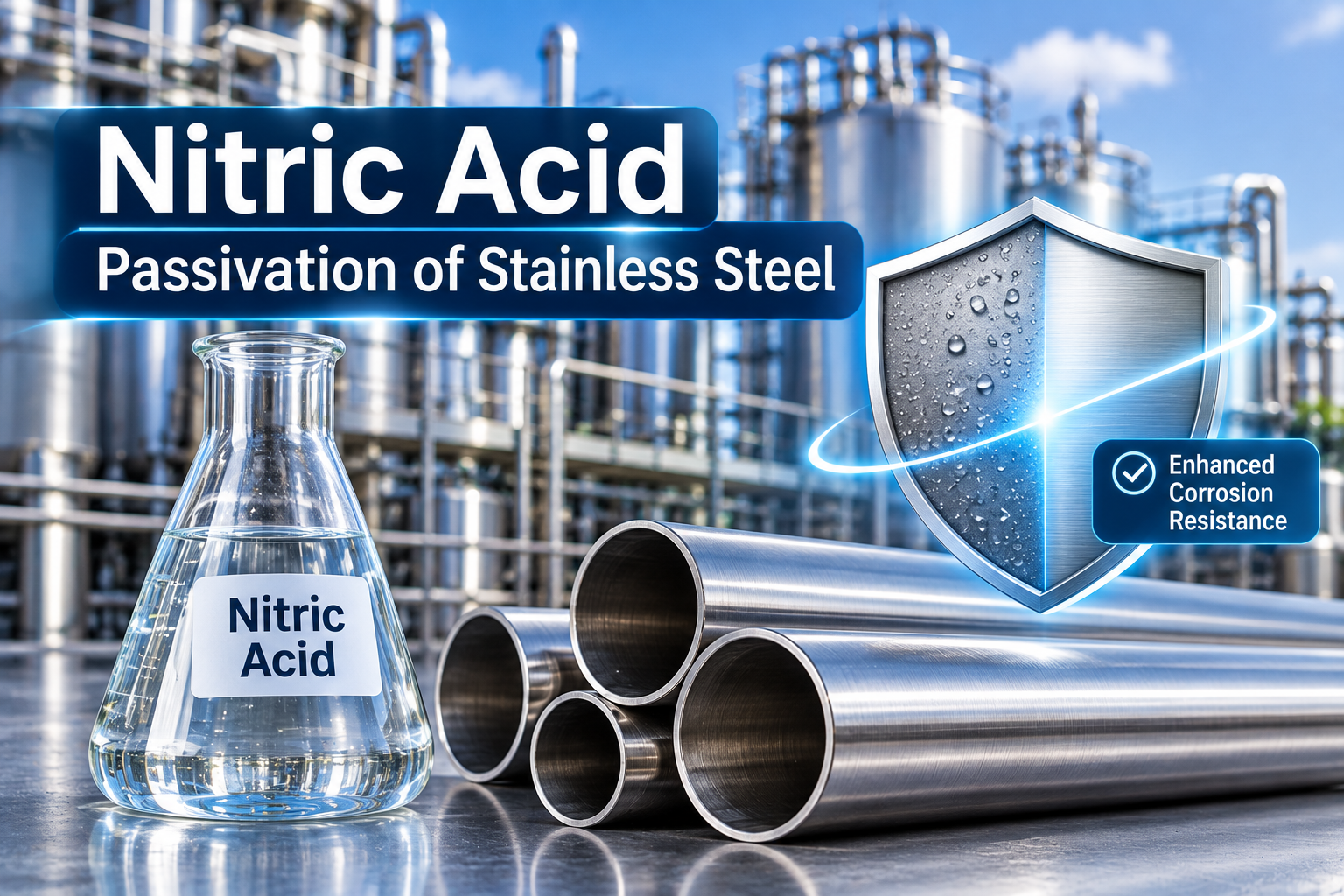
Nitric Acid Passivation of Stainless Steel
Stainless steel is widely used in industrial environments because of its corrosion resistance, mechanical strength, and durability. However, its resistance to corrosion depends heavily on the condition of its surface. During manufacturing, machining, welding, and fabrication, surface contamination can reduce its protective properties.
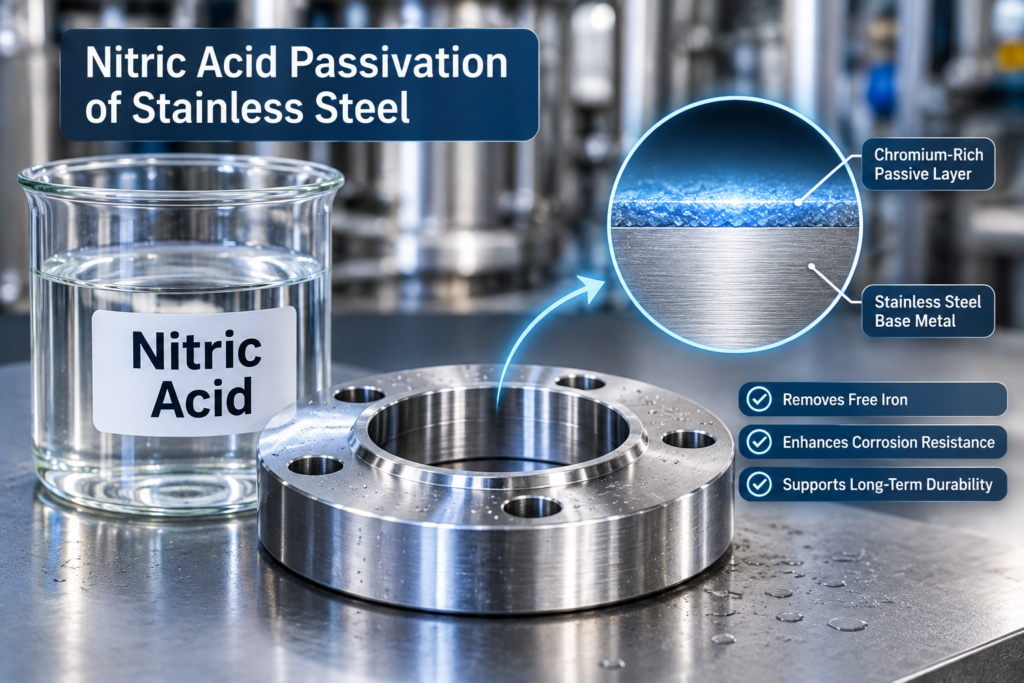
Nitric acid passivation is an established chemical treatment used to improve the corrosion resistance of stainless steel. This process helps remove free iron and certain surface contaminants. Consequently, it supports the formation and stability of the naturally occurring chromium-rich passive layer.
Understanding the chemical principles of this treatment is essential for manufacturers. It also helps industrial operators select suitable processing conditions and maintain product quality.
What Is Nitric Acid Passivation?
Passivation is a chemical surface treatment designed to improve the protective characteristics of stainless steel. It does not create a thick coating or significantly change the material’s dimensions.
Instead, the process removes contaminants that may interfere with the natural passive film. This film consists primarily of chromium-rich oxide compounds. It separates the underlying metal from the surrounding environment and reduces the rate of corrosion.
Nitric acid acts as an oxidizing agent during this treatment. Under suitable conditions, it helps remove free iron from the surface. This allows the chromium-rich passive layer to remain dominant.
However, passivation does not repair structural defects, remove heavy scale, or correct severe surface damage. Such conditions require appropriate preparation before chemical treatment.
The Chemical Mechanism Behind Passivation
The corrosion resistance of stainless steel depends on chromium. When chromium is exposed to oxygen, it forms a thin and protective oxide layer.
This layer is extremely important because it limits further interaction between the metal and corrosive substances. Furthermore, it can regenerate when the surface experiences minor mechanical damage, provided suitable environmental conditions exist.
Nitric acid supports this process through its oxidizing properties. It helps remove surface iron contamination while promoting conditions favorable to passive film development.
Three important mechanisms contribute to the treatment:
Removal of Free Iron
Machining equipment, carbon steel tools, and handling operations can introduce iron particles onto stainless steel surfaces.
These particles may become corrosion initiation points. Nitric acid helps dissolve exposed free iron, reducing the possibility of localized rust formation.
Development of the Chromium-Rich Surface
After contamination removal, the stainless steel surface can develop a more stable chromium-rich oxide film.
This passive film acts as a protective barrier. Its effectiveness depends on alloy composition, surface condition, and environmental exposure.
Improvement of Surface Corrosion Resistance
Removing contaminating iron reduces the likelihood of surface discoloration and localized corrosion.
Nevertheless, passivation cannot guarantee complete protection against every corrosive environment. Chlorides, strong acids, and unsuitable operating conditions can still damage stainless steel.
Factors Affecting Nitric Acid Passivation Efficiency
The effectiveness of nitric acid treatment depends on several technical variables. Controlling these factors is essential for achieving consistent industrial results.
Acid Concentration
Nitric acid concentration influences the chemical activity of the treatment solution. Different stainless steel grades may require different treatment conditions.
An unsuitable concentration can reduce treatment effectiveness or increase material compatibility concerns. Therefore, concentration must follow a validated procedure.
Temperature
Temperature affects reaction rates and chemical behavior. Higher temperatures can accelerate certain surface reactions.
However, excessive temperatures may create unwanted chemical effects. Industrial facilities must maintain controlled operating conditions.
Treatment Duration
Contact time determines how long the stainless steel surface remains exposed to the treatment solution.
Insufficient exposure may leave contamination behind. Excessive exposure can introduce unnecessary processing risks.
Stainless Steel Grade
Not all stainless steel grades respond identically to nitric acid treatment.
Austenitic, ferritic, martensitic, and duplex stainless steels have different chemical compositions. Their chromium and other alloying element contents influence passivation behavior.
Therefore, treatment specifications should always consider the exact material grade.
Surface Preparation Before Passivation
Surface preparation is one of the most important stages of successful passivation. Chemical treatment cannot compensate for poor cleaning or unsuitable surface conditions.
First, oils, grease, and machining residues should be removed. These substances can prevent uniform contact between the acid solution and the metal surface.
Next, visible particles and other contaminants must be eliminated. Heavy oxide scale and heat discoloration may require separate descaling or pickling procedures.
After preparation, the stainless steel surface should be suitable for the selected passivation process. Consistent preparation improves treatment reliability and reduces quality variations.
Industrial Applications of Nitric Acid Passivation
Nitric acid passivation is used in several industries where stainless steel components require reliable corrosion resistance.
Chemical Processing Equipment
Chemical plants use stainless steel tanks, pipelines, valves, and process vessels. Passivation helps reduce contamination-related corrosion risks in these components.
Food and Beverage Manufacturing
Processing equipment must maintain suitable surface conditions to support hygiene requirements. Passivation helps reduce free iron contamination on stainless steel surfaces.
Pharmaceutical Equipment
Pharmaceutical production systems require carefully controlled material surfaces. Chemical passivation can support corrosion resistance and reduce contamination risks.
Industrial Piping Systems
Stainless steel pipelines often operate under demanding chemical and environmental conditions. Proper surface treatment helps maintain their long-term performance.
Precision Metal Components
Machined stainless steel parts may contain embedded iron particles. Passivation helps improve surface cleanliness and corrosion resistance.
Quality Control After Passivation
Quality control determines whether the treatment has achieved the required surface condition. Visual inspection alone is not sufficient to verify passivation quality.
Industrial manufacturers should use suitable testing methods based on the material specification and application.
Important quality control considerations include:
- Visual Inspection: Identifying discoloration, visible rust, and surface irregularities.
- Free Iron Testing: Evaluating whether contaminating iron remains on the surface.
- Water Immersion Testing: Assessing surface behavior under specified testing conditions.
- Humidity Testing: Evaluating resistance to corrosion under controlled moisture exposure.
- Documentation: Recording treatment conditions, material grades, and inspection results.
ASTM A967/A967M provides established requirements for chemical passivation treatments of stainless steel parts. Selecting an appropriate verification method is important for consistent quality.
Safety and Handling Considerations
Nitric acid is a highly corrosive chemical and a strong oxidizing agent. Industrial handling requires appropriate engineering controls and trained personnel.
Facilities should use compatible equipment, suitable ventilation, and appropriate protective clothing. Chemical storage areas must also prevent contact with incompatible substances.
Furthermore, nitric acid solutions can generate hazardous fumes under certain conditions. Therefore, exposure control and emergency procedures are essential.
Waste solutions must be collected and managed according to applicable environmental regulations. Direct disposal without appropriate treatment can create serious environmental risks.
Conclusion
Nitric acid passivation plays an important role in maintaining the corrosion resistance of stainless steel components. Its primary function is removing free iron and supporting the development of a chromium-rich passive surface.
However, successful treatment depends on several factors, including acid concentration, temperature, exposure time, alloy composition, and surface preparation.
For industrial applications, selecting suitable nitric acid specifications is an important part of maintaining consistent processing quality. Sipan Holding focuses on supplying industrial chemical products, supporting businesses that require reliable sourcing and professional supply coordination.

