
Nitric Acid Stability: The Role of Temperature, Light, and Storage Conditions
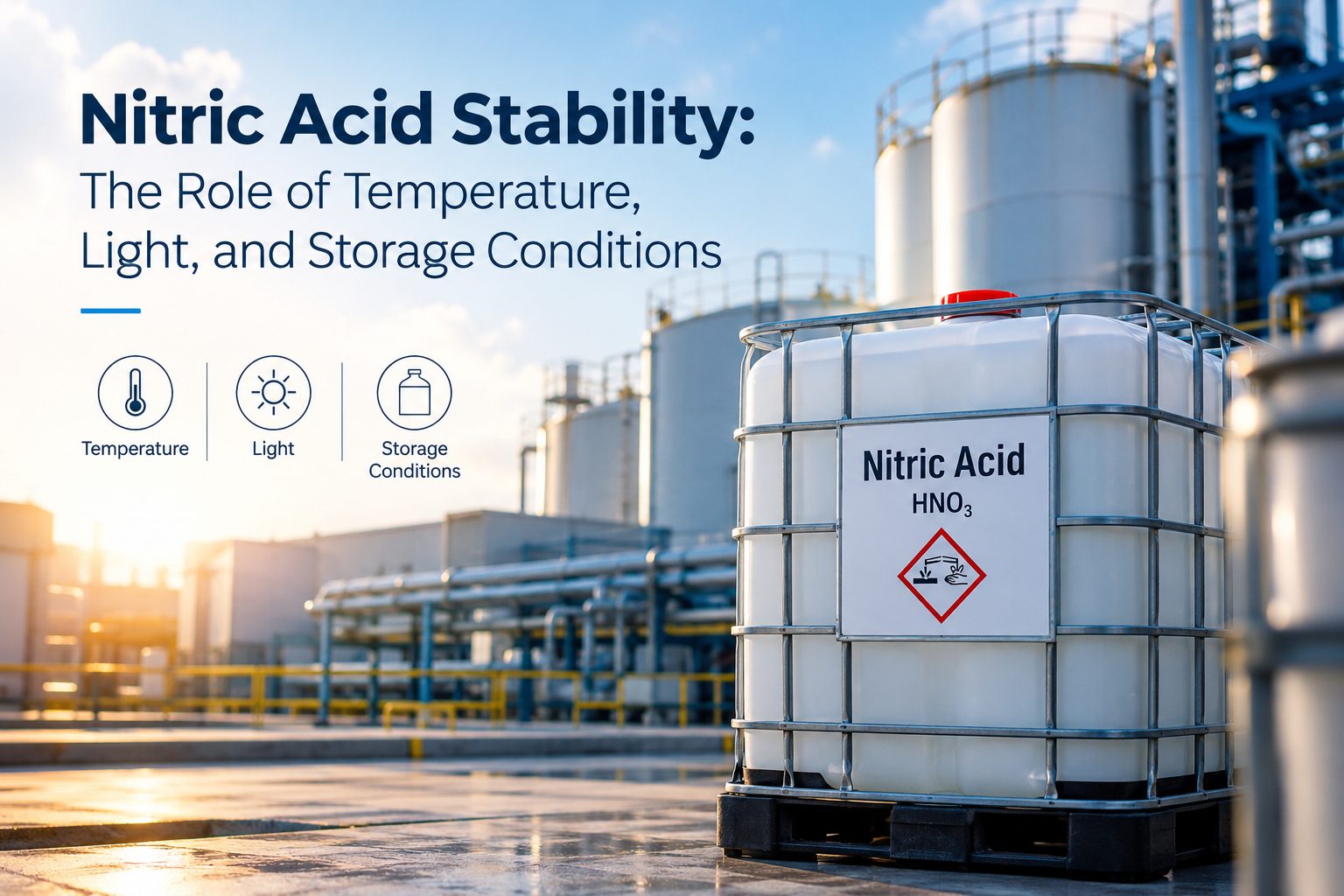
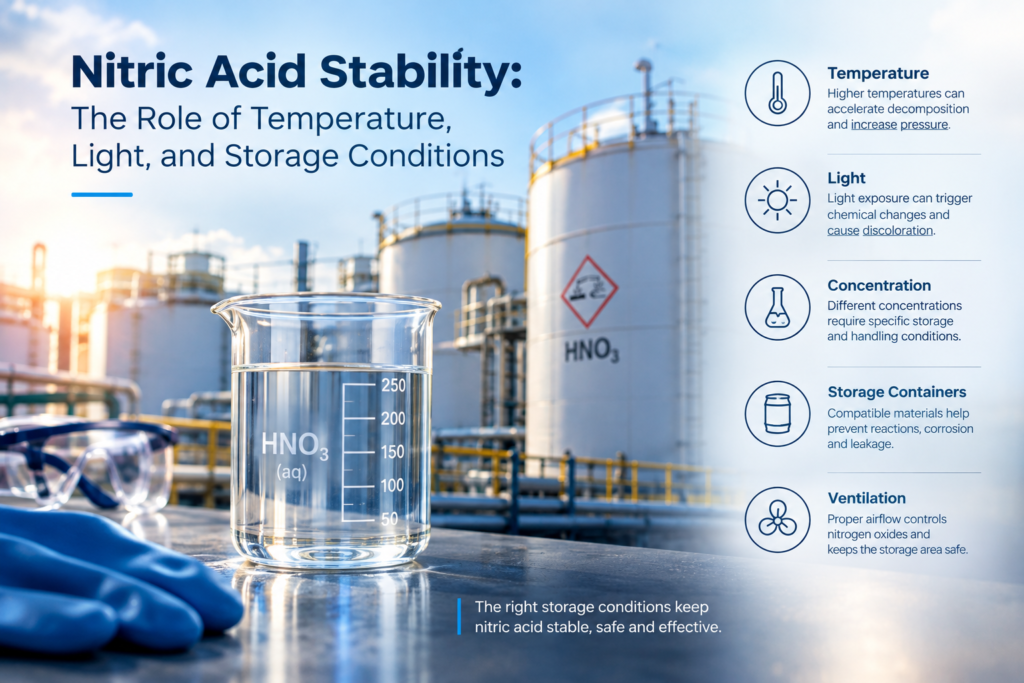
Nitric acid is a highly reactive inorganic chemical widely used in fertilizers, metal processing, chemical manufacturing, and other industrial applications. Its stability during storage depends on several environmental factors, including temperature, light exposure, concentration, and container conditions. Understanding these factors is important because unsuitable storage conditions can affect acid quality, increase decomposition, and create additional safety risks.
What Affects Nitric Acid Stability?
Nitric acid can undergo chemical changes over time, particularly when exposed to heat, light, or incompatible materials. These changes are influenced by the acid concentration and the surrounding storage environment.
For industrial users, maintaining controlled conditions helps preserve product quality and reduces the risk of unwanted reactions. Therefore, temperature control, suitable containers, and protection from direct light should be considered essential parts of nitric acid storage.
The Effect of Temperature on Nitric Acid
Temperature is one of the most important factors affecting nitric acid stability. As temperature increases, the rate of chemical reactions generally becomes faster. In nitric acid, higher temperatures can promote decomposition and increase the formation of nitrogen oxides.
This process may cause changes in the appearance and composition of the stored acid. It can also increase pressure inside closed containers because gaseous decomposition products may accumulate.
For this reason, nitric acid should be stored in a cool and well-controlled environment. Avoiding unnecessary temperature fluctuations can also help maintain more consistent storage conditions.
How Light Can Affect Nitric Acid
Light exposure is another factor that can influence nitric acid stability. Nitric acid can gradually decompose under suitable conditions, and light can contribute to this process.
Decomposition may result in the formation of nitrogen dioxide and other nitrogen oxide species. These compounds can give concentrated nitric acid a yellowish or reddish appearance.
Therefore, nitric acid should generally be protected from direct sunlight and excessive artificial light. Limiting light exposure helps reduce conditions that may accelerate chemical changes during prolonged storage.
Why Concentration Matters
The concentration of nitric acid has a significant effect on its behavior and storage requirements. Dilute and concentrated nitric acid do not have identical physical and chemical characteristics.
More concentrated solutions can present stronger oxidizing properties and require greater attention to storage compatibility. In addition, the behavior of nitric acid can change as water content and temperature vary.
For industrial storage, the concentration should always be considered when selecting the appropriate container, storage area, and handling procedures.
The Importance of Proper Storage Containers
The storage container must be compatible with nitric acid and its concentration. Some metals and organic materials can react strongly with nitric acid, while certain materials may provide better resistance under specific conditions.
Container selection should therefore be based on the exact acid concentration, operating temperature, storage duration, and applicable safety standards. Containers should also remain in good condition and be regularly inspected for signs of damage or deterioration.
Using unsuitable materials can increase the possibility of corrosion, leakage, or chemical reactions.
Ventilation and Nitrogen Oxides
Proper ventilation is particularly important when storing nitric acid. Even under controlled conditions, decomposition can produce nitrogen oxides.
These gases can accumulate if the storage area has insufficient ventilation. Consequently, industrial storage facilities should be designed to control potential emissions and prevent the accumulation of hazardous vapors.
Ventilation systems should be selected according to the facility’s chemical safety requirements and local regulations.
Temperature Control During Storage
Stable storage temperatures are preferable to repeated heating and cooling. Large temperature changes can affect pressure, evaporation, and the overall storage environment.
Nitric acid should be kept away from direct heat sources, hot equipment, and areas where temperatures can rise significantly. Storage conditions should also be monitored when large quantities are involved.
Maintaining a controlled environment reduces unnecessary stress on containers and helps limit chemical changes.
Avoiding Incompatible Materials
Nitric acid is a strong oxidizing agent, so contact with incompatible substances can create serious hazards. Organic materials, reducing agents, combustible substances, and certain metals may react with nitric acid.
For this reason, nitric acid should be stored separately from incompatible chemicals. Clear labeling and appropriate segregation can help prevent accidental contact during storage and handling.
This separation is especially important in industrial facilities where multiple chemicals are stored in the same area.
Signs of Possible Chemical Changes
Changes in color can sometimes indicate chemical changes in nitric acid. Concentrated nitric acid may develop a yellow or reddish appearance due to dissolved nitrogen dioxide and related nitrogen oxide species.
However, appearance alone should not be used to determine whether nitric acid is suitable for industrial use. Quality assessment should follow appropriate analytical procedures and the product specifications required for the intended application.
If unexpected changes occur, the material should be assessed by qualified personnel before further use.
Best Practices for Long-Term Storage
Long-term nitric acid storage requires a combination of chemical compatibility, environmental control, and regular inspection. Storage areas should be cool, properly ventilated, protected from direct sunlight, and separated from incompatible substances.
Containers should remain tightly controlled according to the supplier’s safety requirements while allowing for any necessary pressure-management system. Regular inspections can also help identify corrosion, leaks, damaged containers, or other potential problems before they become serious.
Following the appropriate Safety Data Sheet (SDS) and applicable regulations is essential for safe industrial storage.
Conclusion
Temperature, light, concentration, container compatibility, and ventilation can all influence nitric acid stability during storage. Controlling these factors helps reduce decomposition, maintain product quality, and minimize potential safety hazards.
For industrial applications, storage conditions should always be selected according to the specific nitric acid concentration and the requirements of the facility. Proper handling and storage practices are essential for maintaining both chemical stability and workplace safety.
For nitric acid supply and purchase, contact Sipan Holding.

