
White Spirit Evaporation Rate
White spirit is a widely used petroleum-based solvent in paints, coatings, cleaning products, and various industrial processes. Its evaporation rate is an important property because it affects drying time, surface quality, solvent consumption, and workplace safety. Understanding the factors that influence evaporation helps manufacturers select suitable grades and control production conditions more effectively.
This article examines the main factors affecting white spirit evaporation, explains their industrial significance, and outlines practical considerations for handling and storage.
What Is the Evaporation Rate of White Spirit?
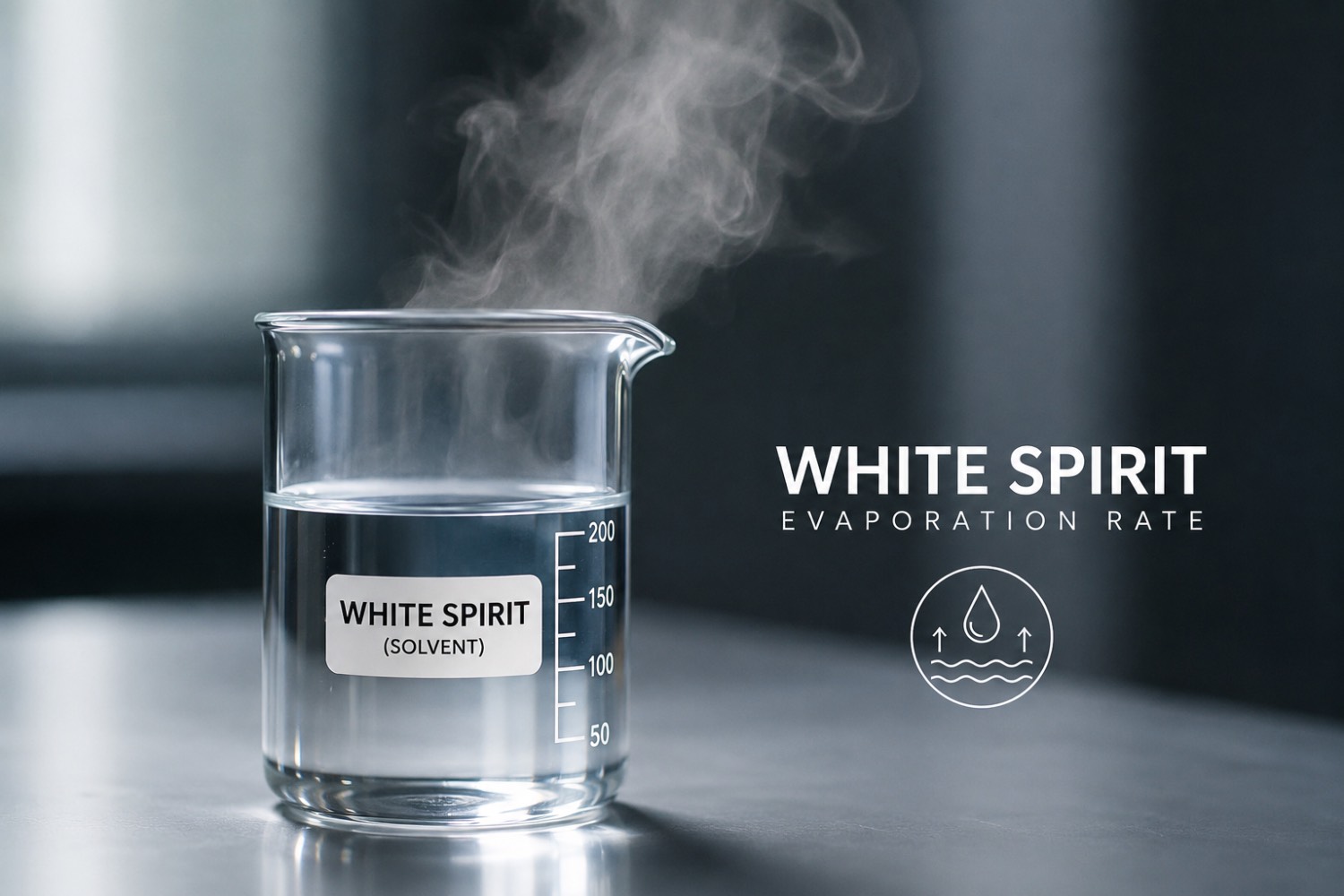
The evaporation rate describes how quickly a liquid changes into vapor under specific conditions. For white spirit, this rate depends on its chemical composition, temperature, airflow, exposed surface area, and surrounding environment.
White spirit is a mixture of hydrocarbons rather than a single chemical compound. Therefore, its evaporation behavior varies between grades and formulations. Products containing a greater proportion of lighter hydrocarbons may evaporate faster than those containing heavier components.
Manufacturers should evaluate the technical data sheet for the specific product instead of assuming that every white spirit grade behaves identically.
Key Factors Affecting White Spirit Evaporation
Temperature
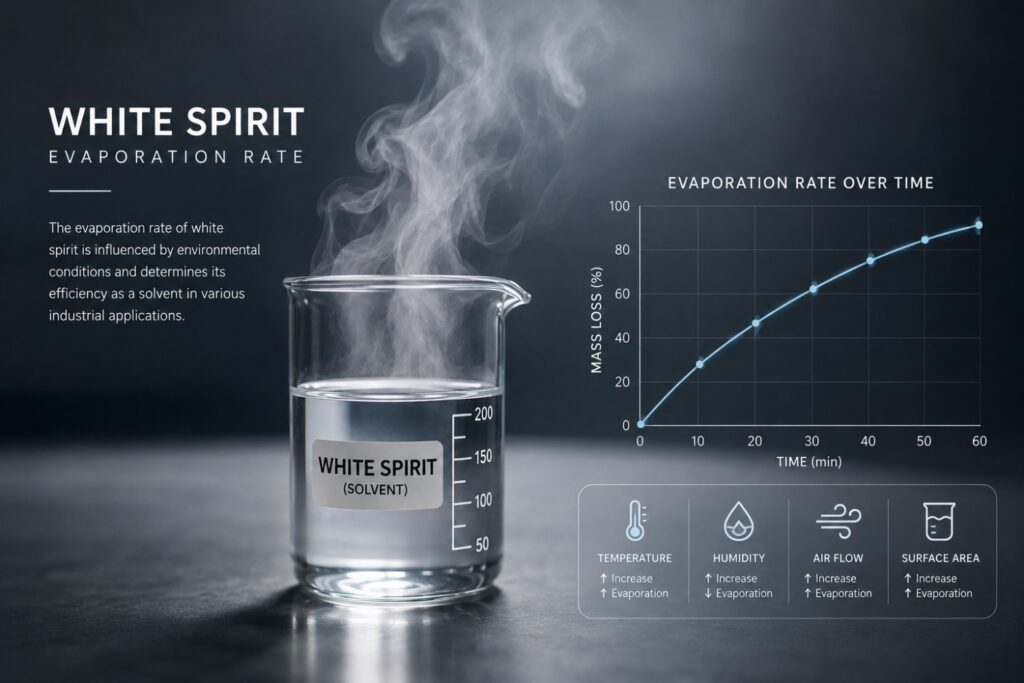
Temperature is one of the most influential factors affecting evaporation. As temperature increases, more liquid molecules gain enough energy to escape from the surface into the surrounding air.
In industrial environments, higher temperatures may accelerate the evaporation of white spirit from coated surfaces, cleaning equipment, or open containers. However, faster evaporation is not always beneficial. It can shorten working time, increase vapor concentrations, and affect the uniformity of certain coatings.
Consequently, temperature should be controlled according to the product specification and process requirements.
Hydrocarbon Composition
The composition of white spirit directly influences its volatility. Lighter hydrocarbons generally have lower boiling points and higher vapor pressures than heavier hydrocarbons.
As a result, white spirit grades with different hydrocarbon distributions can exhibit noticeably different evaporation characteristics. This difference may influence paint application, cleaning performance, and the time required for a surface to become dry.
Industrial buyers should compare the relevant technical specifications when choosing a product for a particular application.
Airflow and Ventilation
Air movement can increase evaporation by removing solvent vapor from the area immediately above the liquid surface. When this vapor is dispersed, additional liquid molecules can enter the air.
In industrial facilities, ventilation influences both evaporation behavior and the concentration of airborne solvent vapor. However, ventilation must be designed to control exposure and prevent the accumulation of flammable atmospheres.
Suitable ventilation is therefore essential wherever white spirit is used, particularly in enclosed workspaces.
Exposed Surface Area
The exposed surface area also affects how quickly white spirit evaporates. When a larger liquid surface comes into contact with air, more molecules can escape simultaneously.
For example, a thin film of white spirit usually evaporates faster than the same quantity held in a narrow, deep container. This principle is relevant to industrial cleaning, surface preparation, and coating applications.
Nevertheless, spreading a solvent over a larger area can also increase vapor release. Workers should follow appropriate handling procedures and avoid unnecessary exposure.
Air Humidity and Environmental Conditions
Relative humidity has a less direct influence on white spirit evaporation than it does on water-based liquids. White spirit consists mainly of hydrocarbons, which do not evaporate through the same mechanism as water.
However, environmental conditions can still affect its evaporation behavior. Temperature, air movement, and the surrounding vapor concentration are particularly important. Industrial facilities should consider these variables when evaluating drying performance.
Vapor Pressure
Vapor pressure indicates the tendency of a liquid to enter the gas phase at a given temperature. Liquids with higher vapor pressures generally evaporate more readily under comparable conditions.
White spirit grades with more volatile components may have higher vapor pressures. This property can influence drying time, solvent losses, and vapor accumulation during industrial operations.
For accurate product selection, buyers should review the manufacturer’s technical data rather than relying on general descriptions alone.
How Evaporation Rate Affects Industrial Applications
Paints and Coatings
In paint and coating formulations, white spirit helps adjust viscosity and supports application. Its evaporation behavior influences how quickly the solvent leaves the applied film.
If evaporation occurs too rapidly, the coating may not spread or level as intended. Conversely, slower evaporation can extend drying time and delay subsequent production stages.
Selecting an appropriate grade helps manufacturers balance application properties, drying requirements, and final surface quality.
Industrial Cleaning and Degreasing
White spirit is used in certain cleaning applications to dissolve oils, grease, and other hydrocarbon-based residues. Its evaporation rate influences how long the solvent remains available to dissolve contaminants.
Faster evaporation may reduce residue-drying time, while slower evaporation can provide a longer working period. The preferred balance depends on the cleaning method, equipment, and nature of the contamination.
After cleaning, adequate ventilation and suitable protective measures remain essential.
Solvent Storage and Handling
Storage conditions can influence solvent losses and workplace safety. Containers should remain tightly closed when not in use and be stored in a suitable, well-ventilated area away from ignition sources.
Excessive heat can increase vapor pressure and accelerate vapor release. Therefore, facilities should follow the product’s safety data sheet and applicable regulations for storage, transfer, and fire protection.
White spirit vapors may be harmful when inhaled at unsafe concentrations. Appropriate ventilation, ignition control, and personal protective equipment are essential.
Selecting the Right White Spirit Grade
Choosing a suitable white spirit grade requires more than comparing its price. Buyers should assess volatility, boiling range, hydrocarbon composition, intended application, and compatibility with the production process.
Technical data sheets and safety data sheets provide important information for evaluating these characteristics. Where evaporation rate is critical, standardized test methods and consistent testing conditions help make comparisons more meaningful.
Working with a reliable supplier can also help industrial buyers obtain the appropriate grade and supporting technical documentation.
Conclusion
The evaporation rate of white spirit depends on several interacting factors, including temperature, hydrocarbon composition, airflow, exposed surface area, and vapor pressure. These properties influence drying time, cleaning performance, solvent consumption, and workplace safety.
For consistent industrial results, manufacturers should select a grade that matches their process requirements and follow appropriate handling procedures. Sipan Holding supplies industrial chemical products and can assist buyers in evaluating suitable white spirit options for their requirements. Contact Sipan Holding for product information and purchasing inquiries.

